


Why Custom Pet Urns Cost More Than Standard Urns
The first time you compare pet urns online, the price range can be startling.
One urn may cost less than $50.
Another may cost several hundred.
At first glance, both appear to serve the same purpose. They hold ashes. They sit on a shelf. They may even be made from similar materials.
So what creates such a large difference?
It is a fair question, especially when you are already making decisions during an emotional time.
The answer is not simply “handmade costs more.”
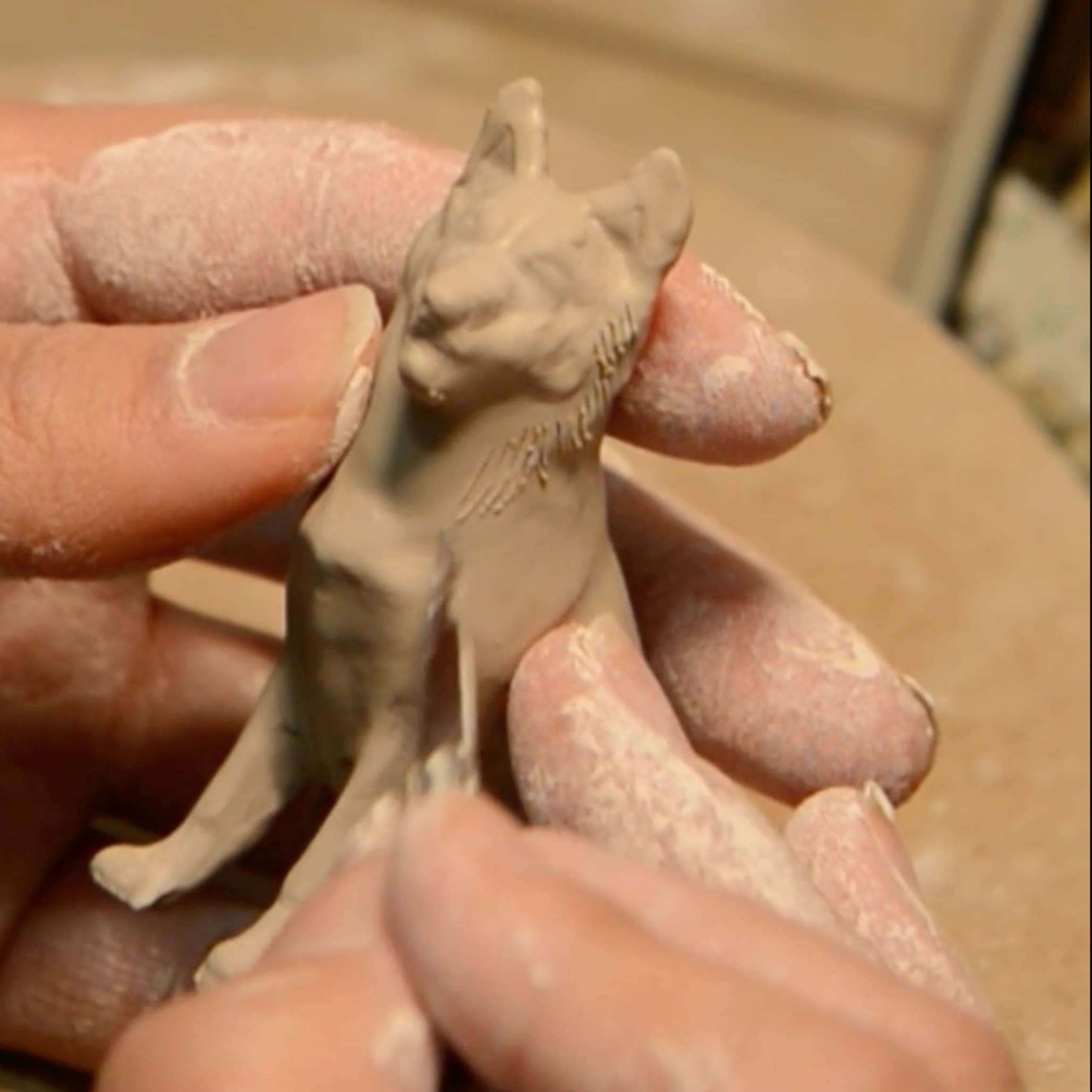
With a custom pet urn, much of what you are paying for happens before the finished piece ever appears: studying photographs, making design decisions, shaping the form, allowing the clay to dry, firing it, painting individual markings, reviewing the result, and carefully preparing it for its journey home.
A standard urn is generally made to be repeated.
A custom urn begins again with every pet.
The Biggest Difference Is Not the Clay
Ceramic quality matters.
The body of the clay, the glaze, the firing temperature, the construction, and the finish all affect durability and appearance.
But the raw material is rarely the main reason a custom urn costs more.
The real difference is the amount of individual work behind it.
A standard ceramic urn can be designed once, shaped with the same mold, finished in the same color, and produced repeatedly.
A personalized urn cannot follow that process in quite the same way.
The face changes.
The markings change.
The pose changes.
Even two dogs from the same breed may have completely different expressions.
One may have a wider muzzle. One ear may lean slightly outward. The fur around the neck may be fuller. A small white patch may appear beneath the chin.
None of those details can be added accurately by selecting a color from a menu and pressing a button.
They have to be noticed first.
Before the Clay, There Is Observation
This part of the process is easy to overlook because it does not leave visible marks on the finished urn.
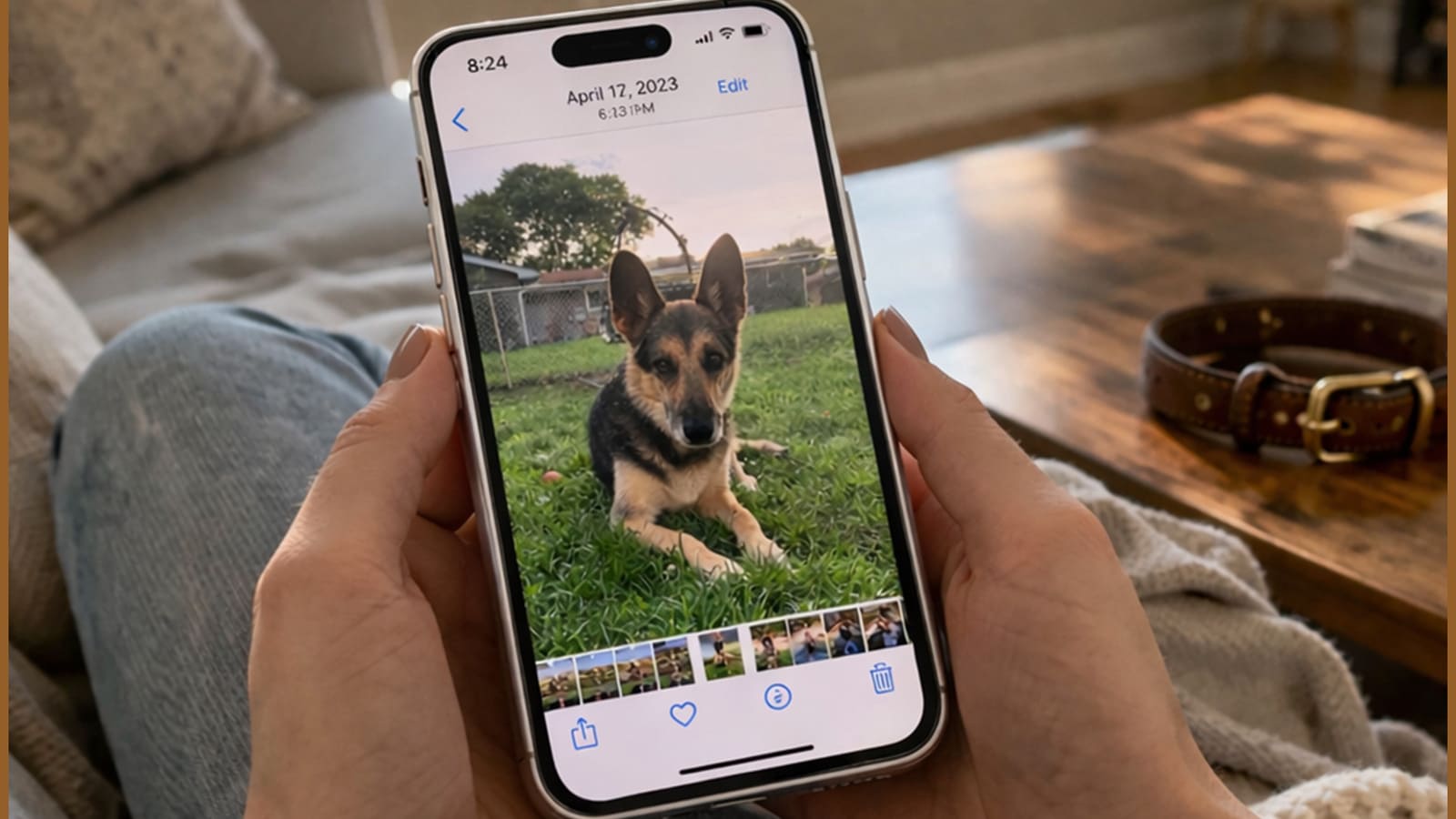
Before sculpting begins, someone has to study the reference photos closely.
Not just the favorite portrait.
The side view.
The photo taken in different light.
The image that shows the shape of the ears.
The ordinary phone picture where a distinctive marking is easier to see.
The work starts with questions:
Does the coat become lighter around the muzzle?
Is one eye surrounded by darker fur?
Does the chest marking continue around the side?
Which expression appears most consistently across the photos?
Those decisions influence everything that follows.
A useful reference set does not need to be professional. Clear everyday photographs often reveal more than a carefully posed portrait. Our guide on how many photos you need for a custom pet urn explains which angles and details tend to be most helpful.

You Are Paying for Judgment, Not Only Time
Handmade work takes longer, but time alone does not explain its value.
Experience shows up in the decisions made during that time.
How large should the eyes be in relation to the face?
How much texture should be added to suggest fur without making the sculpture feel stiff?
Should an ear be adjusted because it looks different across several photographs?
Which marking is essential to recognition, and which detail would add clutter without improving the likeness?
A less experienced maker may simply add more.
An experienced one learns what to leave out.
That restraint matters.
A memorial can include many technically accurate details and still fail to feel familiar. Another may be slightly simplified, yet immediately remind the family of their pet.
The difference often comes down to judgment.
Recognition Matters More Than Perfect Replication
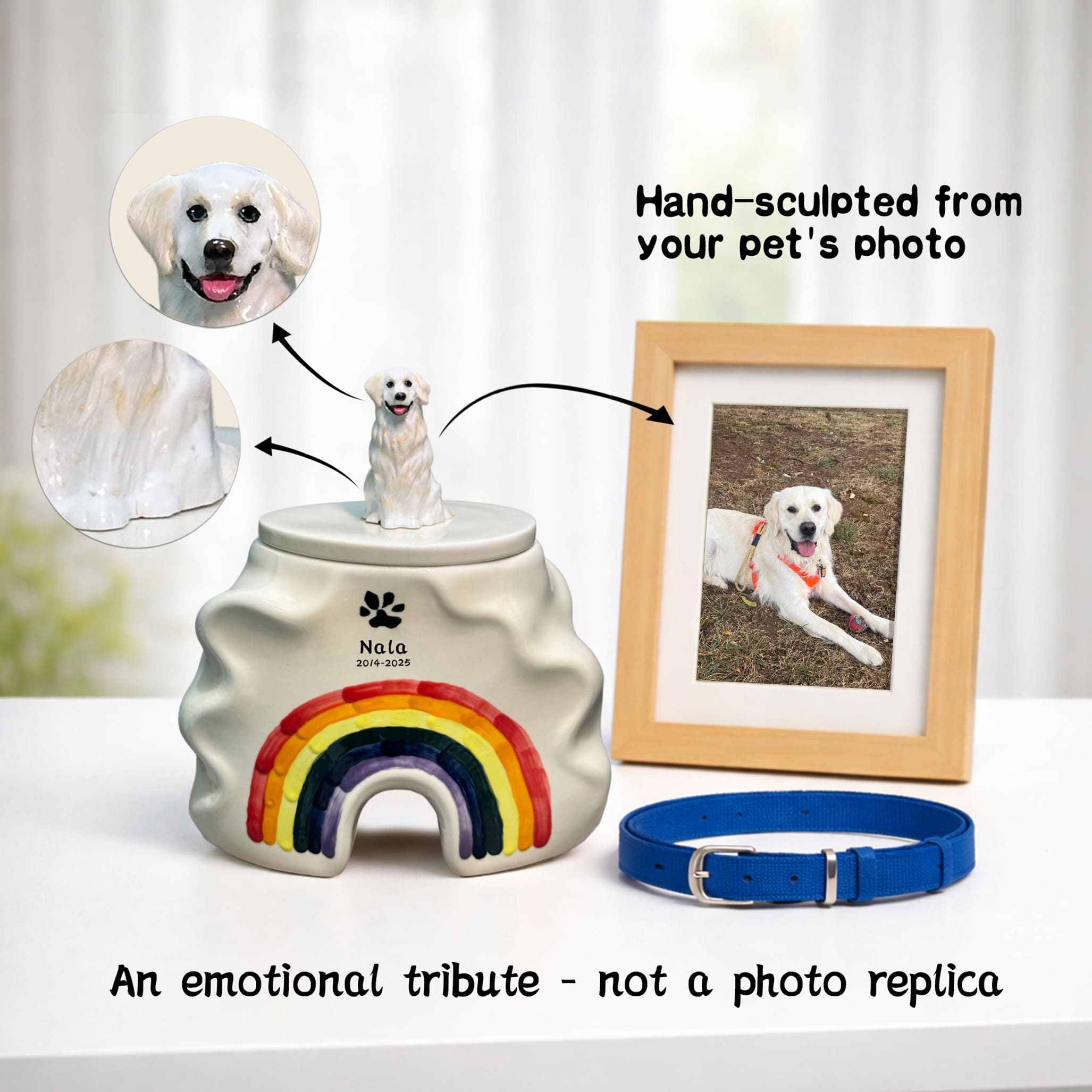
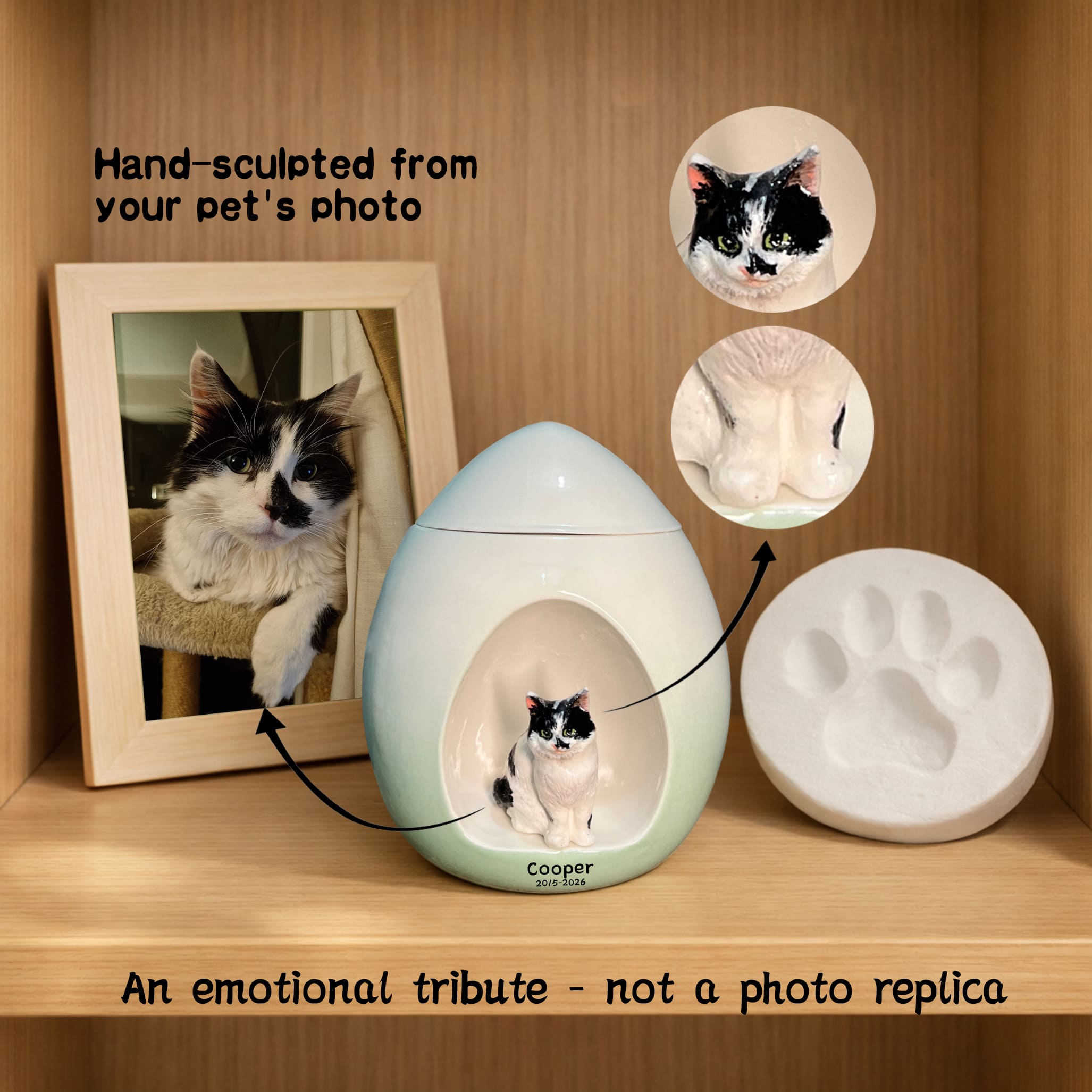
A handcrafted memorial is not a three-dimensional photograph.
It is an artistic interpretation based on photographs.
That distinction is important.
No ceramic sculpture can reproduce every strand of fur, every change in expression, or every effect of light. Even photographs do not show a pet exactly the same way from one moment to the next.
The goal is not mechanical duplication.
It is recognition.
That brief, instinctive response:
That feels like them.
For one family, recognition may come from the eyes.
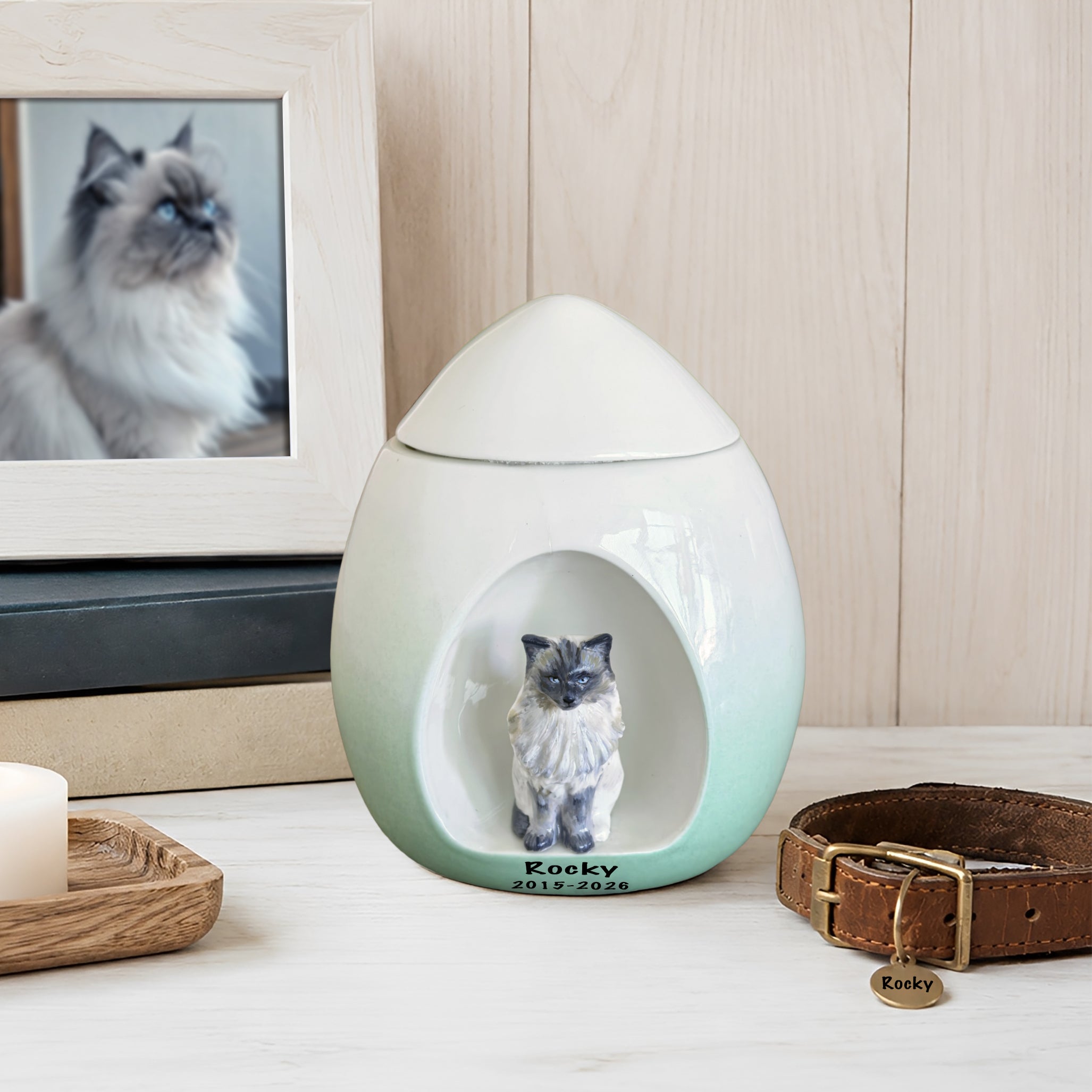
For another, it may be the shape of the ears, the resting pose, or a familiar patch of color across the chest.
This is also why personalized memorials vary so much in style. Some people want a subtle ceramic form with a name. Others want a sculpted figure inspired by their own photographs.
Neither approach is more meaningful.
They simply preserve memory differently.
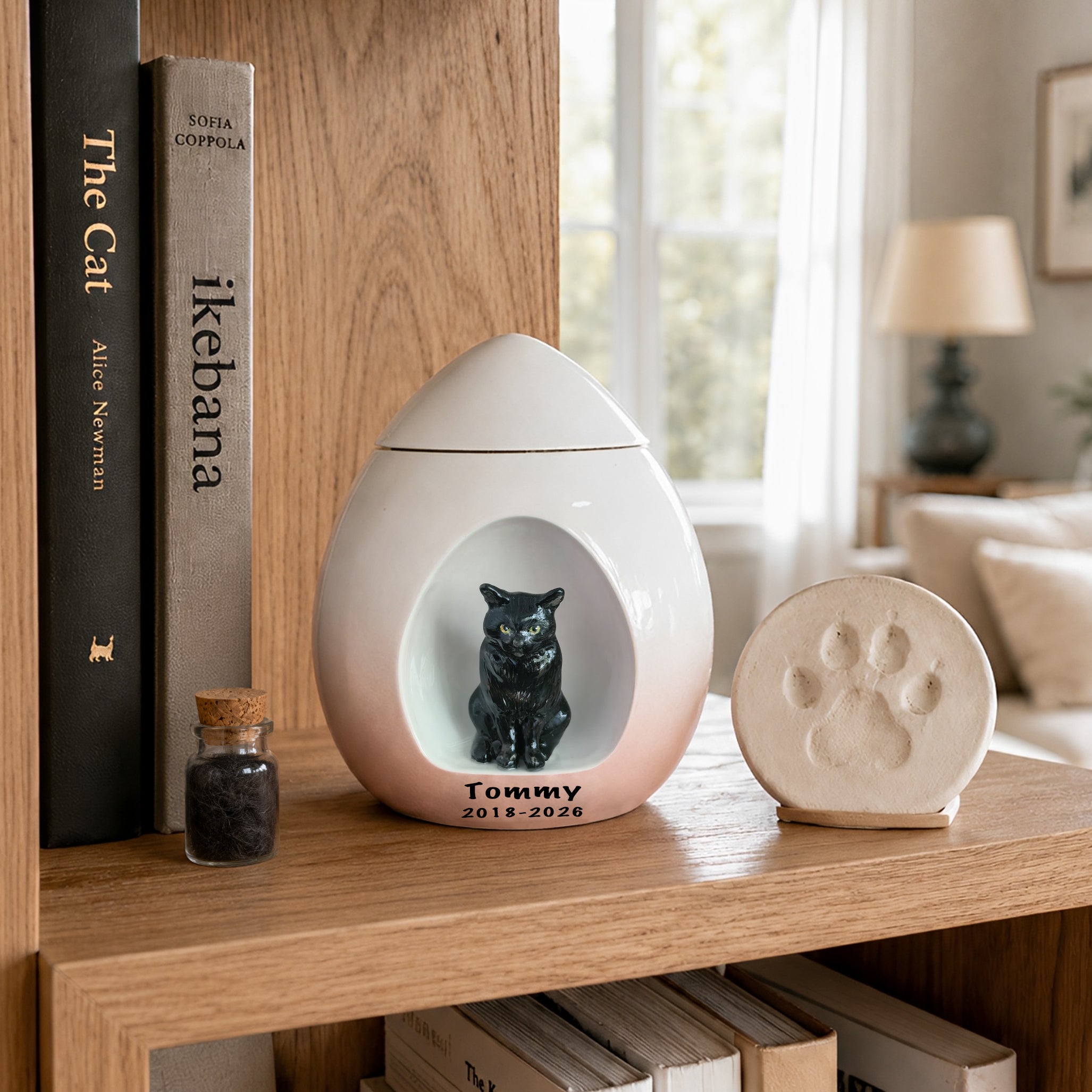
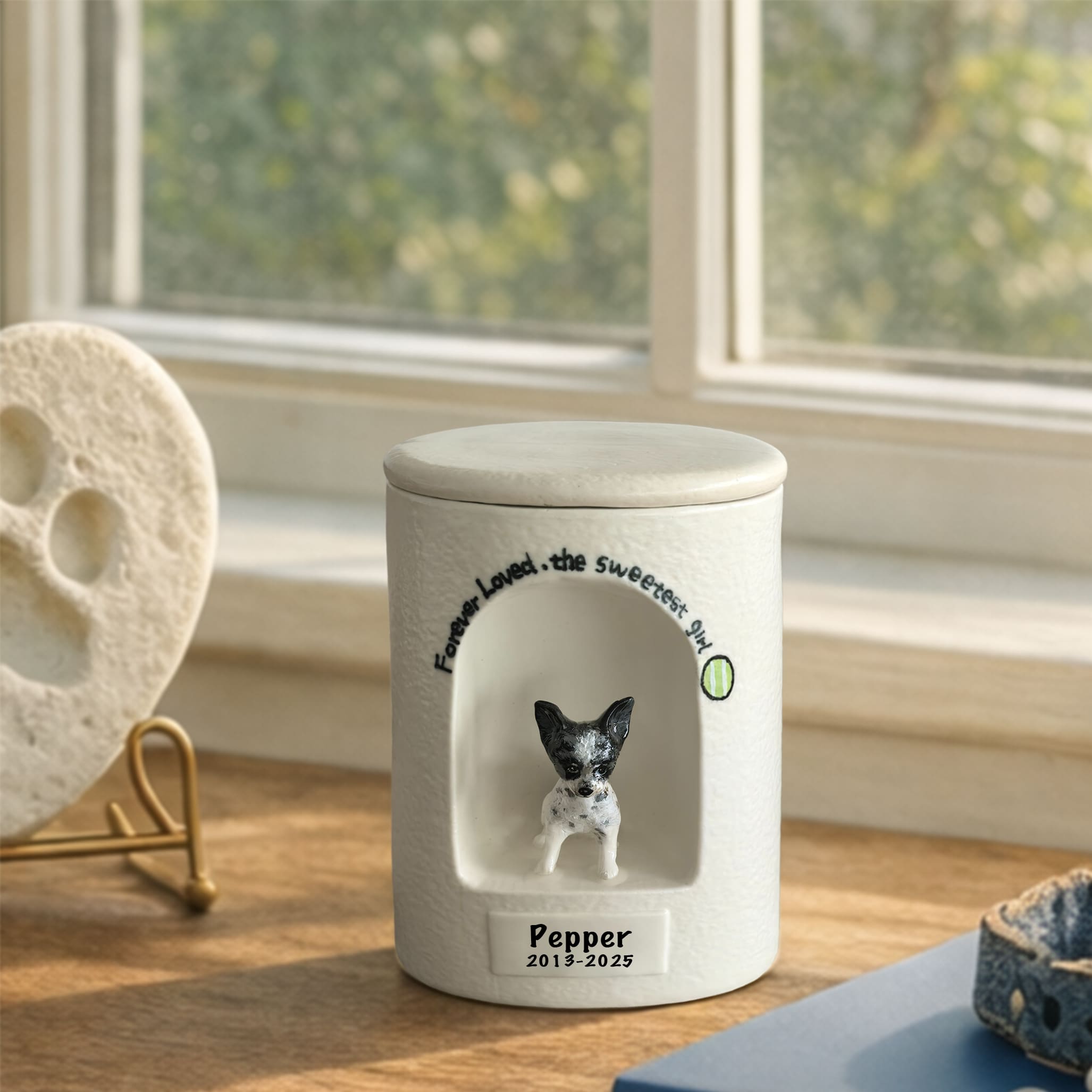
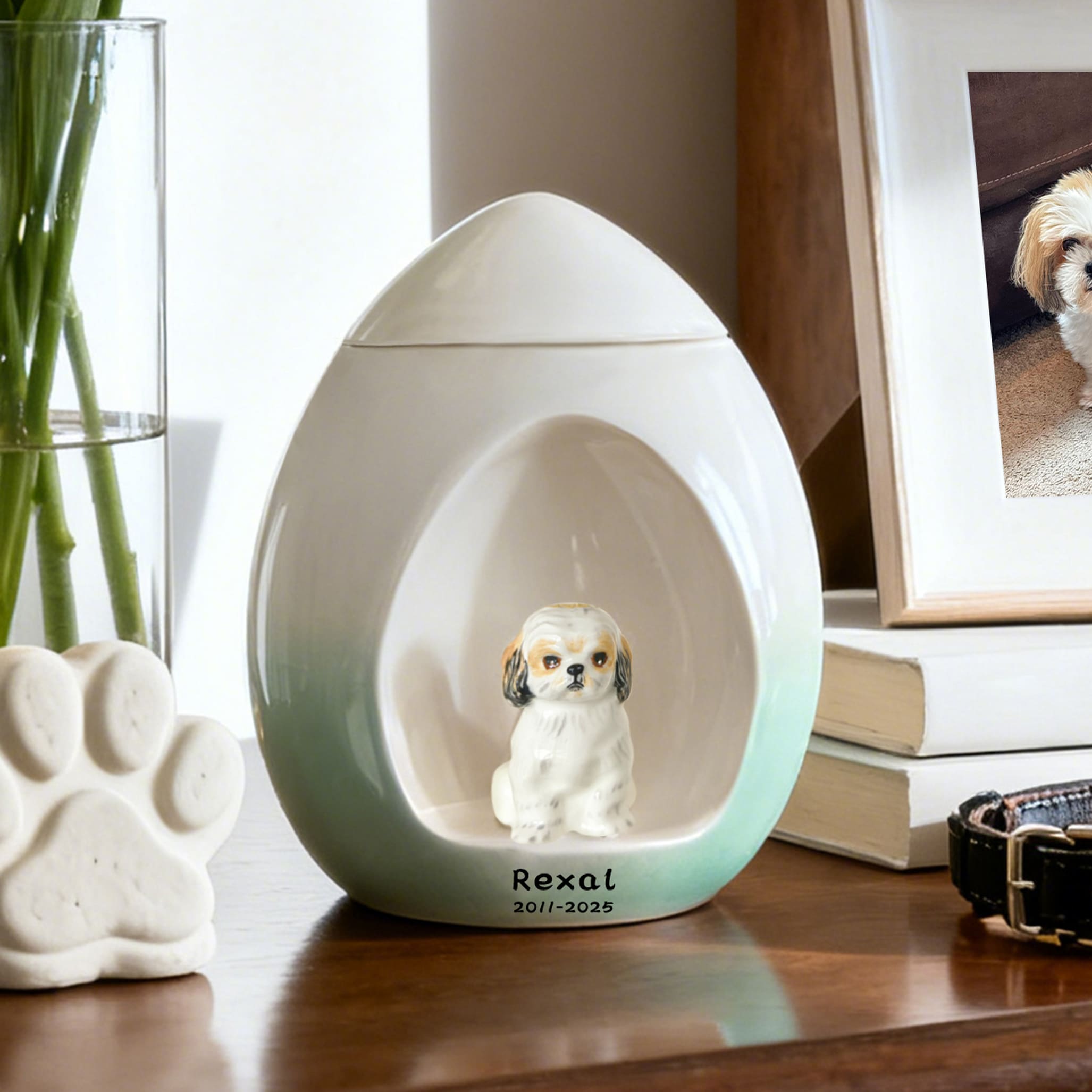
You can see that range by exploring Custom Pet Urns and Pet Urns with Figurines, where the designs move from understated personalization to more recognizable sculptural memorials.
Ceramic Cannot Be Rushed
A custom ceramic urn does not move directly from sculpting to shipping.
Clay has its own schedule.
After shaping, it needs to dry gradually. A piece that looks dry on the outside can still hold moisture within thicker areas. If it enters the kiln too soon, that trapped moisture can create cracks or structural failure.
Once dry, the piece is fired.
Then it must cool.
Depending on the construction and finish, there may be sanding, surface preparation, painting, glazing, or another firing stage.
Each step depends on the one before it.
A small change in thickness, studio humidity, kiln position, or glaze application can influence the final surface. Hand-painted color may also look slightly different after firing than it did when first applied.
That does not mean the process is unpredictable.
It means ceramic work requires experience, patience, and room for natural variation.
A handmade memorial should look carefully made—not factory-identical.
Behind the Workshop: Knowing When to Stop
One of the hardest parts of detailed handwork is deciding when the piece is finished.
There is always another possible adjustment.
A little more texture around the neck.
A darker line near the eye.
A sharper edge on the ear.
But more detail is not automatically more likeness.
Too much texture can make the face feel busy.
Too much contrast can change the expression.
Too much correction can remove the warmth that made the piece feel alive in the first place.
Good work often depends on knowing which details carry the memory—and letting those details lead.
That kind of restraint is difficult to see in a product photograph.
It is still part of what you are paying for.

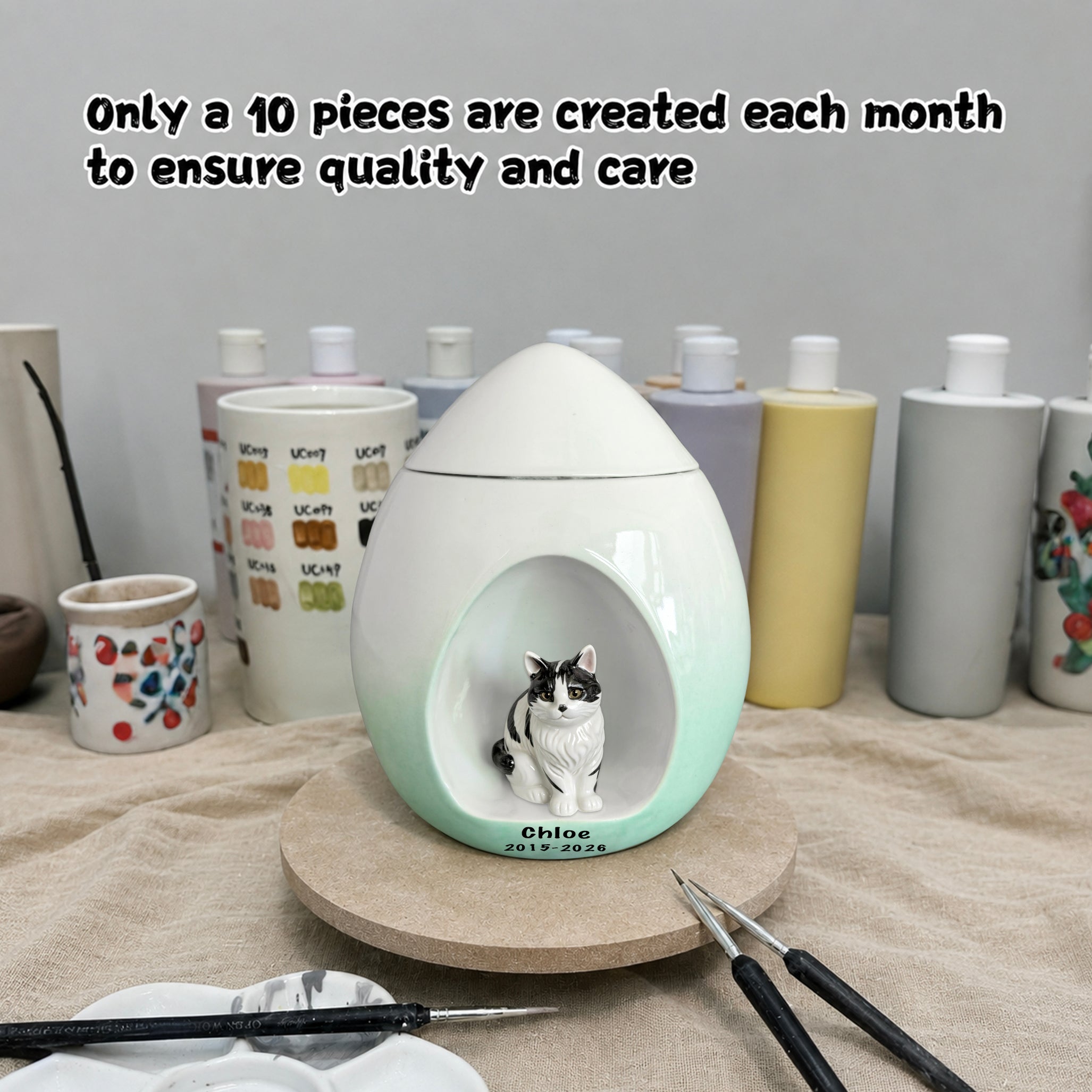
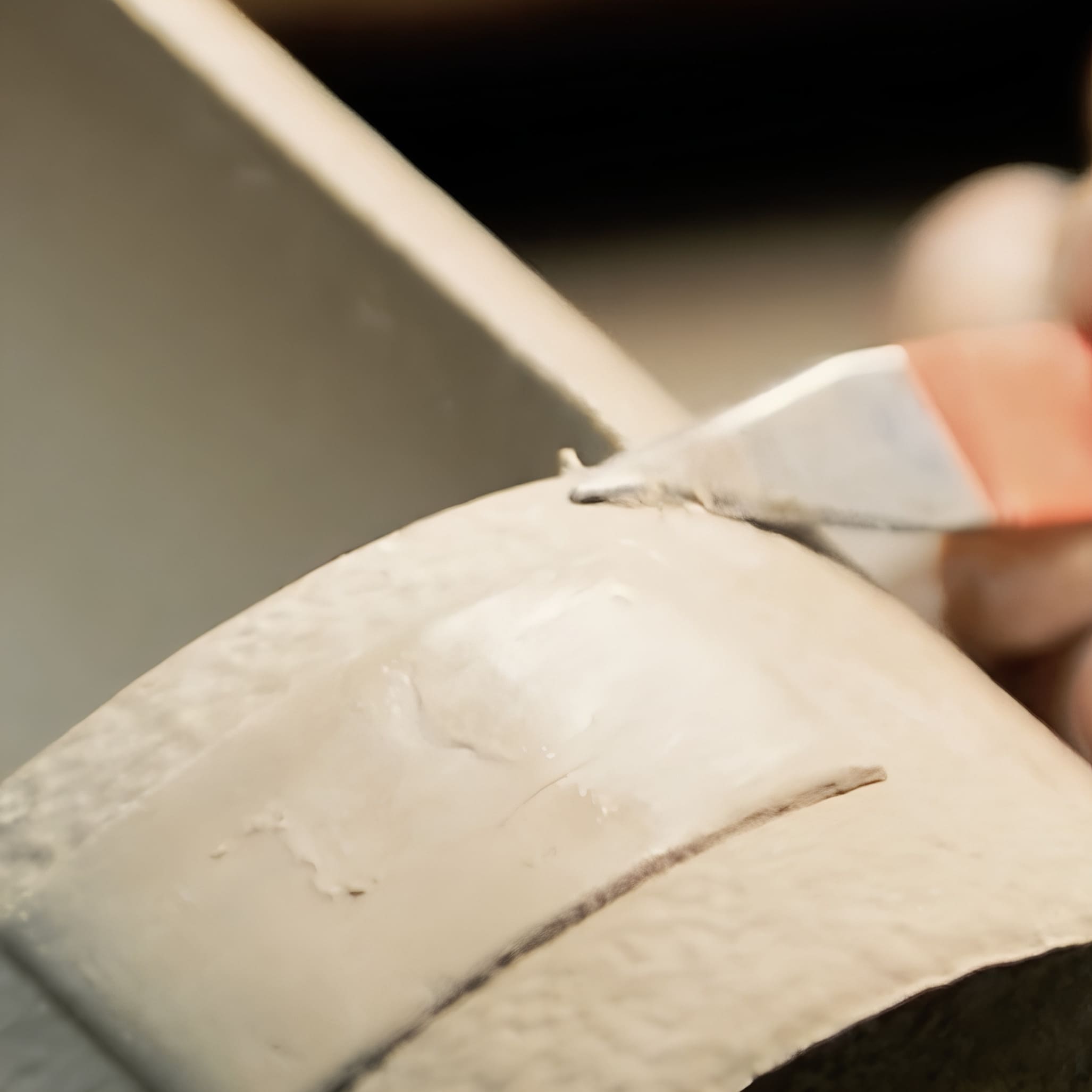
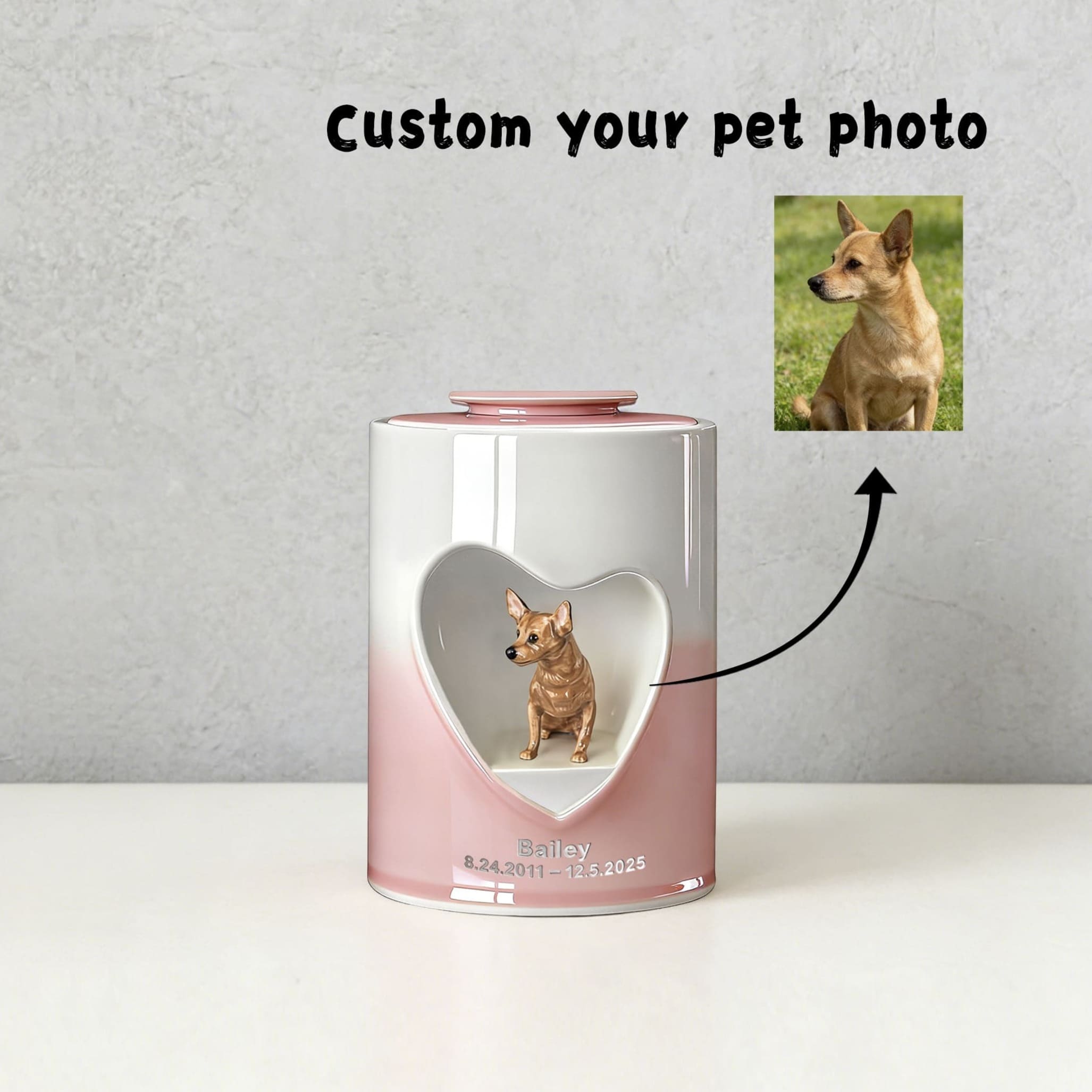
Artist carefully hand-painting the markings on a custom ceramic pet urn
Previews Add Work, but They Also Reduce Uncertainty
Not every studio shares progress images.
When previews are part of the process, they add another layer of time and communication.
The piece must be photographed clearly.
The family needs time to review it.
Feedback has to be understood and translated into practical adjustments.
Perhaps the ears need to sit differently.
A facial marking may be missing.
The coat color may need to feel warmer or cooler.
Small changes can have a large effect because the family is not judging a generic animal. They know every familiar feature.
A thoughtful preview process does not promise a perfect copy.
It gives the family a chance to confirm that the most important details are moving in the right direction.
Our guide on what happens after you order a custom pet urn explains how photos, sculpting, previews, adjustments, and finishing usually fit together.
To see how photo review, handcrafting, previews, and final adjustments fit together, read our guide to what happens after you order a custom pet urn.
Two Handmade Urns Will Never Be Exactly Alike
Even when two pieces are made in the same studio, with the same clay and the same general design, small differences will remain.
A brushstroke varies.
A sculpted curve shifts slightly.
Glaze settles differently.
The kiln creates subtle changes in color and surface.
In mass production, variation is treated as a problem to eliminate.
In handcrafted work, controlled variation is part of the character.
That does not excuse poor workmanship. A well-made urn should still be structurally sound, carefully finished, and faithful to the approved design.
But it should not be expected to look as though it came from a machine.
Its individuality is part of the point.
The Price Also Reflects Work You Never See
By the time a custom urn appears in a finished photograph, most of the work has disappeared from view.
You do not see:
-
The time spent comparing reference images
-
The abandoned version of an ear that did not feel right
-
The slow drying period
-
The kiln cycle and cooling time
-
The color tests
-
The review photographs
-
The small adjustment made after feedback
-
The protective packing required for a ceramic memorial
The final urn contains all of those decisions, even though none of them appears on an invoice as a separate object.
That is one reason comparing custom and standard urns only by size and material can be misleading.
They may both be ceramic.
They were not created through the same process.
A Custom Urn Is Not Automatically the Right Choice
Higher cost does not make a memorial more meaningful.
Some people genuinely prefer a simple urn.
They may want something private, minimal, and easy to place in the home. A name or date may be all the personalization they need.
That is a completely valid choice.
A custom urn makes more sense when the recognizable details themselves matter to you.
Perhaps seeing a familiar pose would bring comfort.
Perhaps the coat markings are inseparable from how you remember your pet.
Perhaps you want the memorial to feel less like a container and more like a quiet portrait within the home.
The decision is not really between “ordinary” and “special.”
It is between different ways of remembering.
For a closer look at that decision, Should You Choose a Personalized Pet Urn? explores when personalization may—and may not—feel right.
Think About the Years Ahead, Not Only the Day You Order
It is easy to focus on the price while you are shopping.
It may be more helpful to picture the urn in your home several years from now.
Will you want it to blend quietly into a shelf?
Would a sculpted figure feel comforting?
Would seeing your pet's name be enough?
Would familiar markings make you stop and remember an ordinary moment together?
There is no universally correct answer.
The right choice is the one that still feels natural after the urgency of the decision has passed.
If you are leaning toward something personal but are still comparing designs, browsing Personalized Pet Urns can help you see how names, painted details, and sculpted forms create very different kinds of memorials.

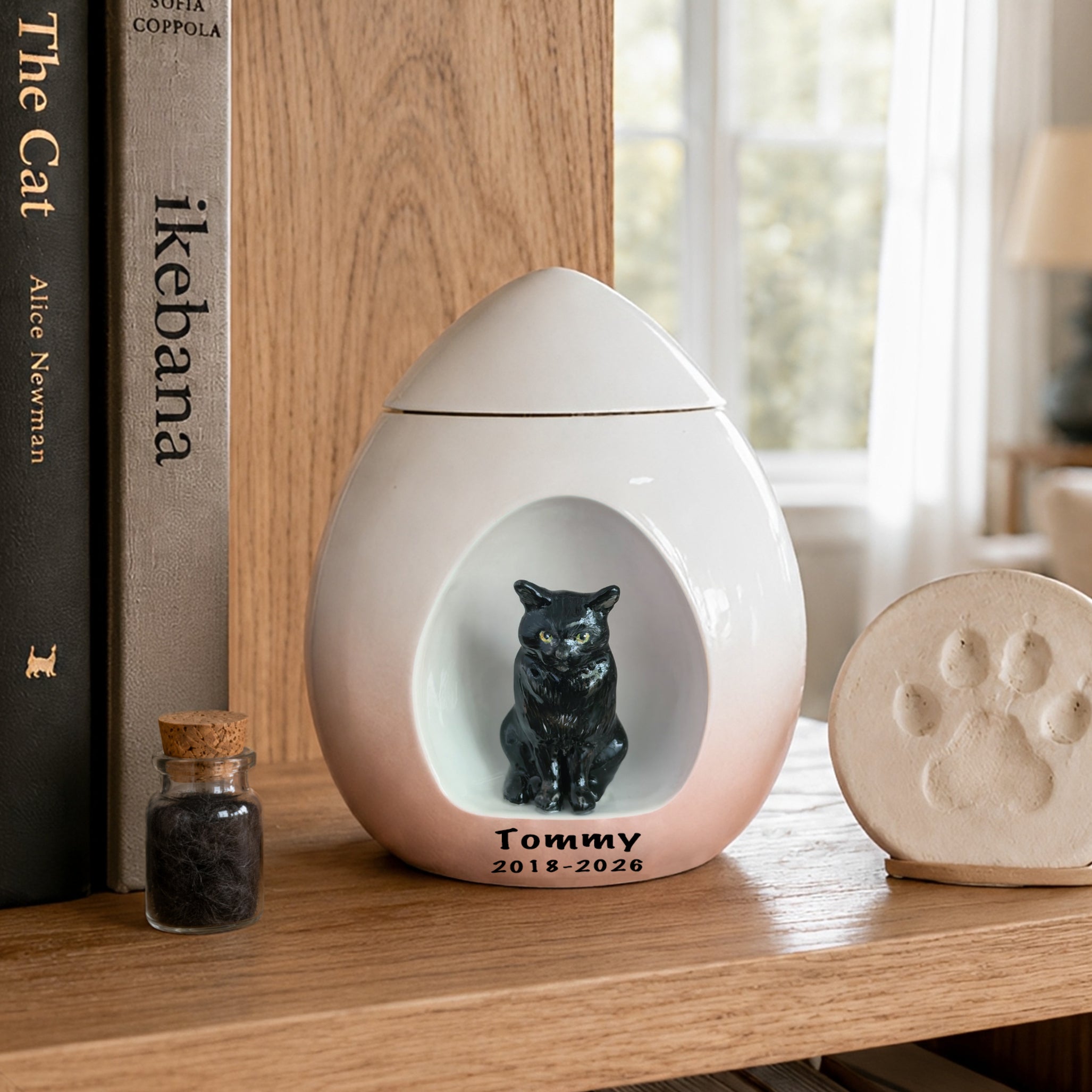
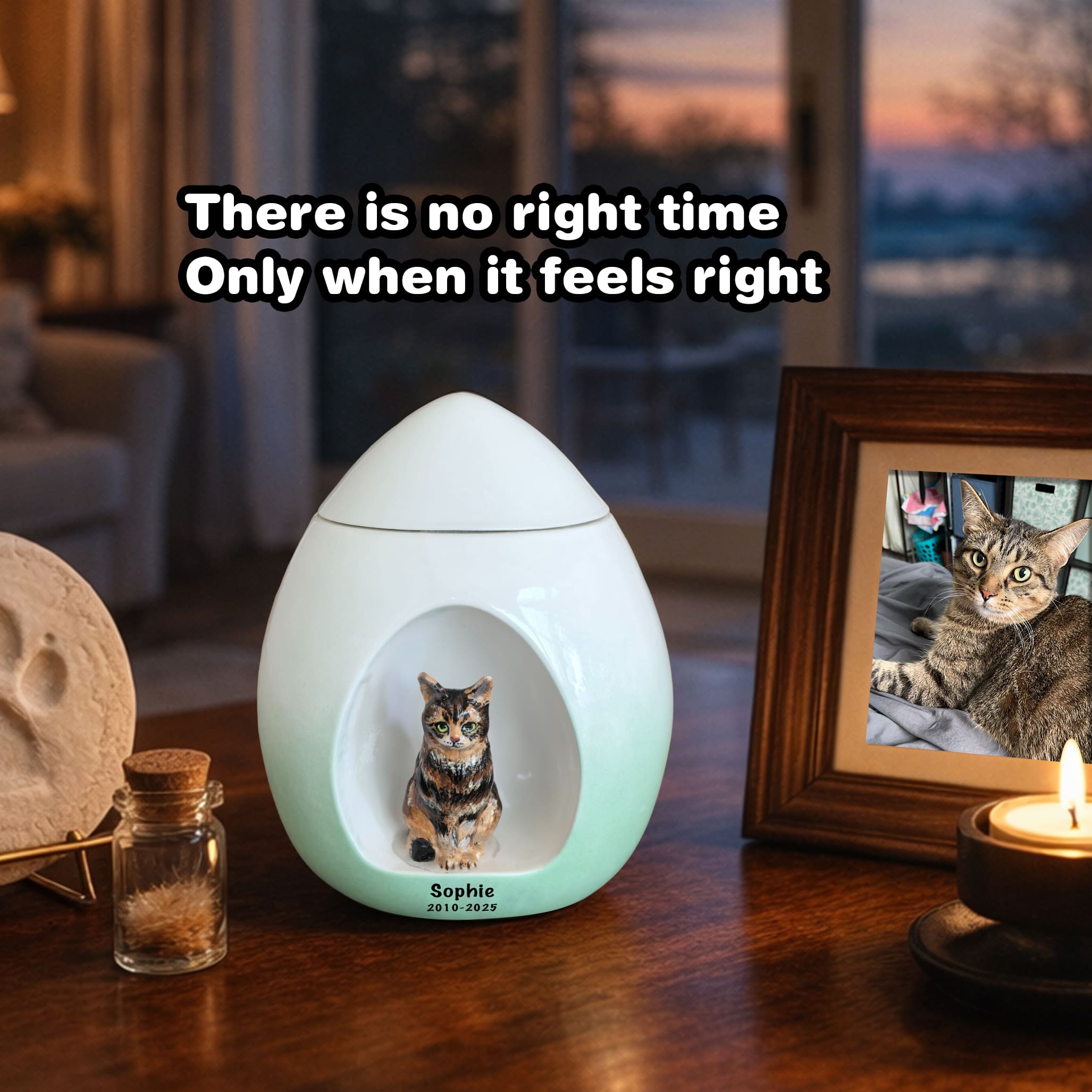
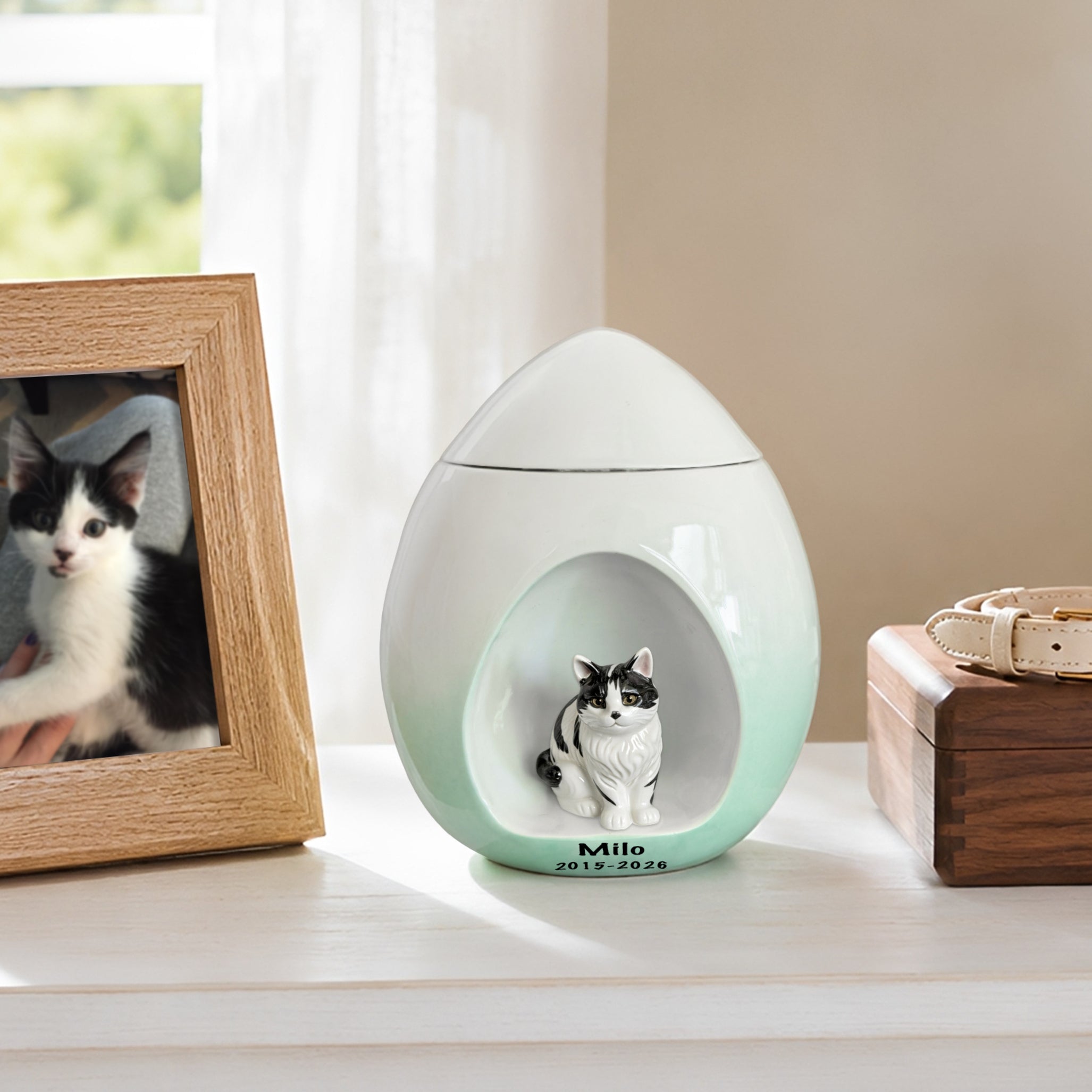
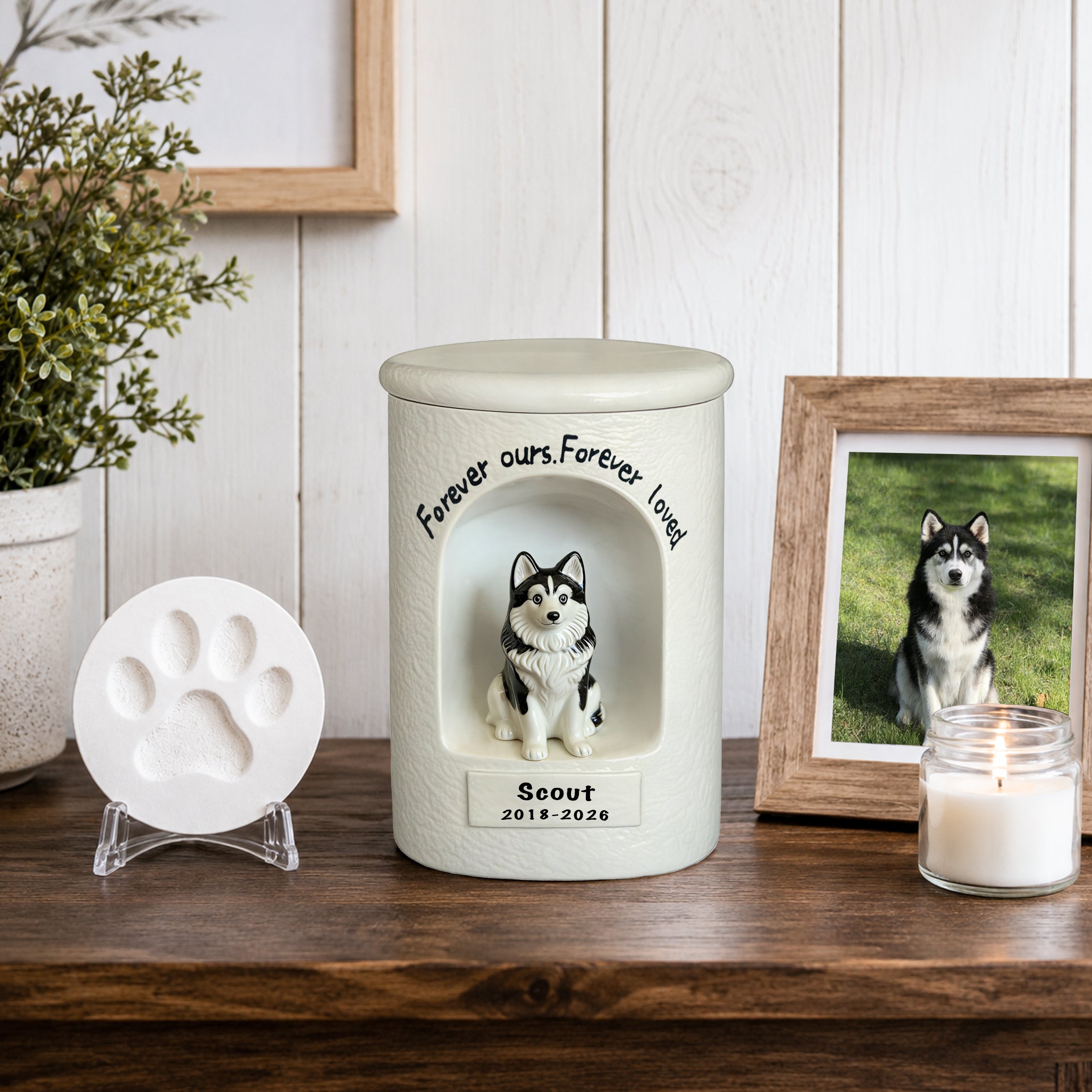
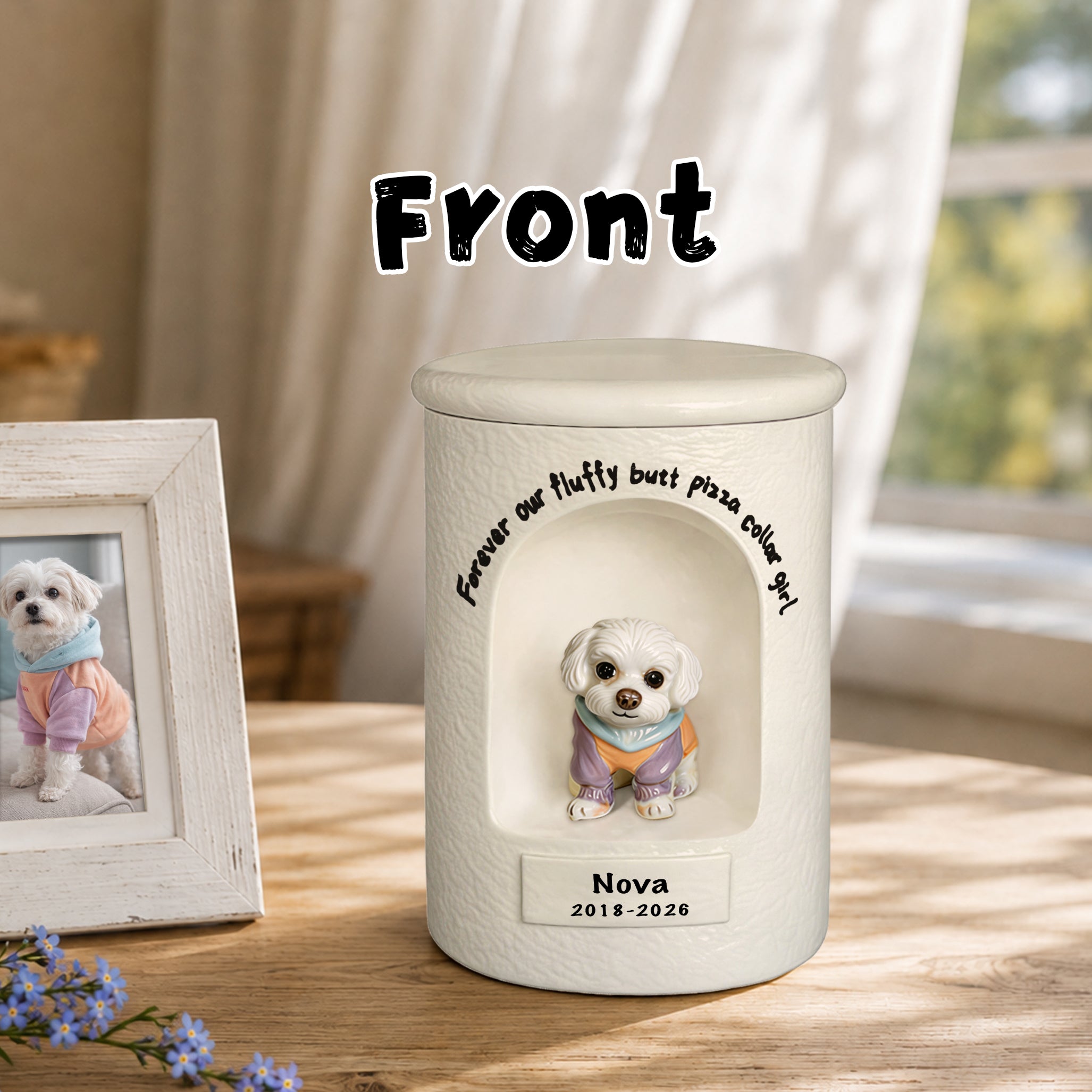
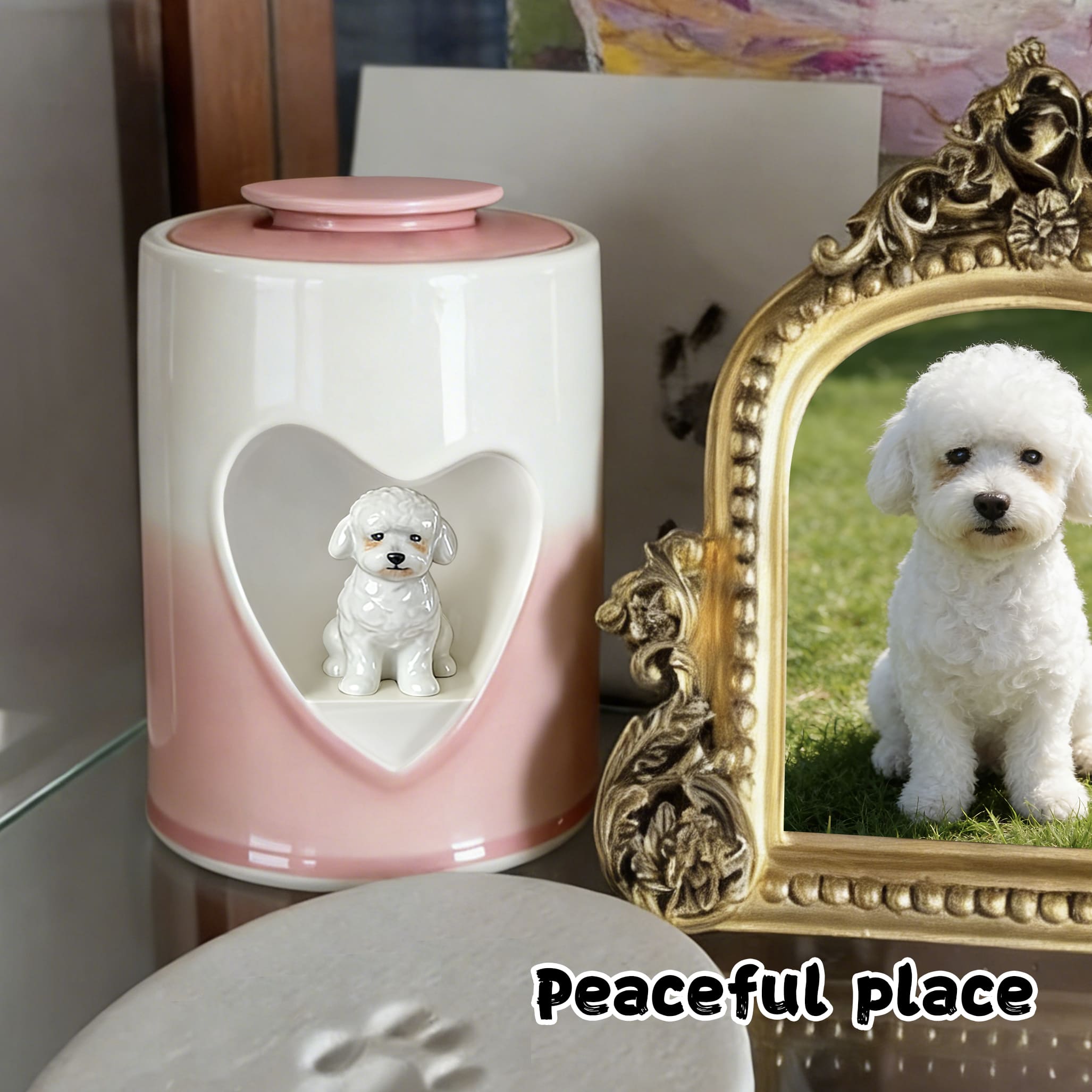
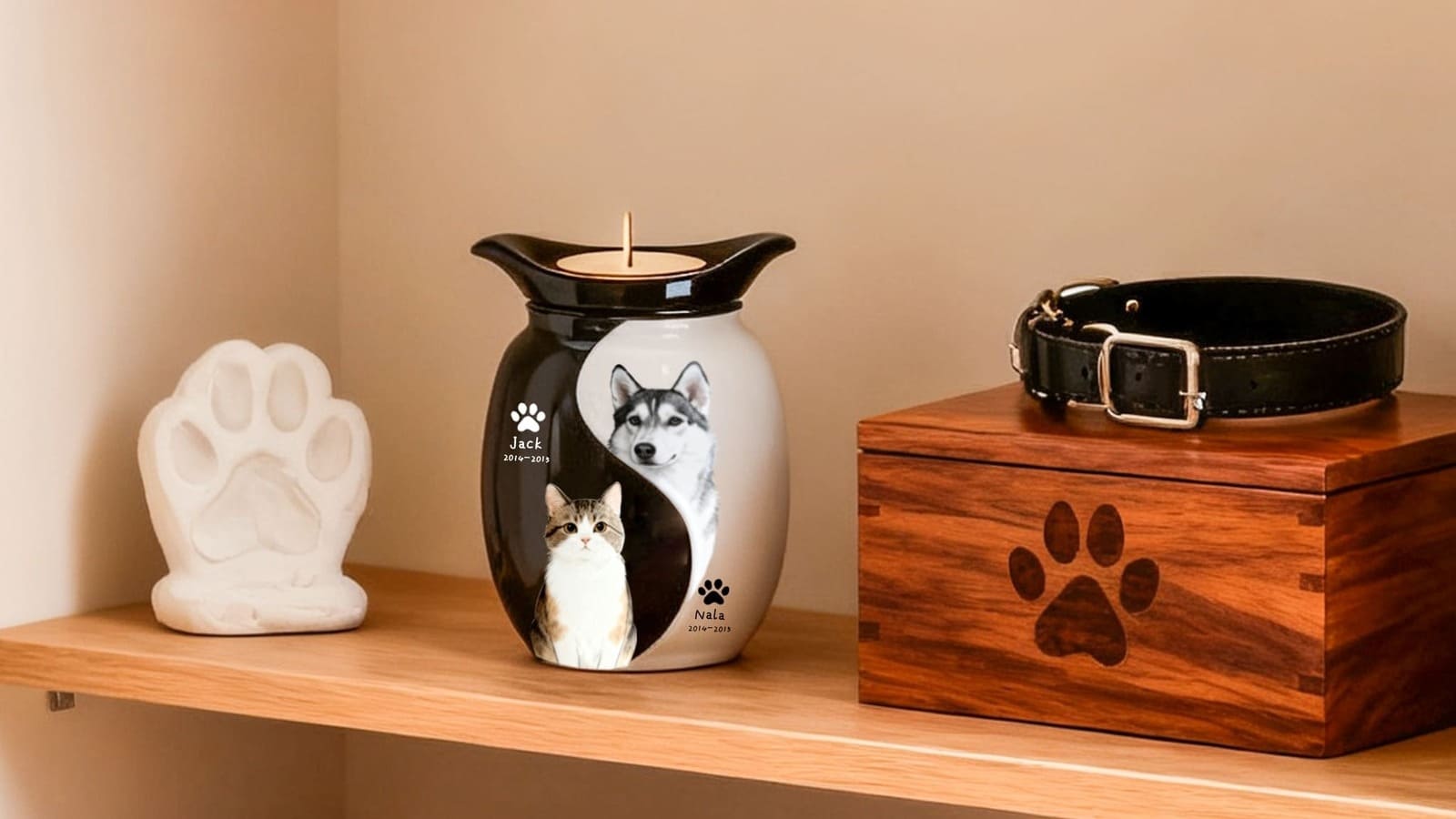
Handcrafted custom pet urn displayed naturally with a framed pet photo at home
So, What Are You Really Paying For?
Not only clay.
Not only paint.
Not only the number of hours recorded in a studio.
You are paying for attention.
For someone to study a face they never knew and understand which details matter to the person who did.
For a piece to be created once instead of repeated thousands of times.
For time that cannot be compressed without changing the result.
For the possibility of looking at the finished memorial and feeling recognition rather than simply ownership.
That is why the price difference can be so large.
A standard urn is a finished product you choose.
A custom urn is a piece that begins because you chose it.
The value of a memorial is not found in how many details it contains. It is found in how naturally those details bring someone you love back to mind.
Final Thoughts
Custom pet urns cost more because they are made through a different kind of process.
The materials matter, but they are only the beginning.
The greater cost comes from individualized design, skilled judgment, hand construction, ceramic drying and firing, detailed painting, review, adjustment, and careful finishing.
That process will not be necessary for everyone.
Some families will feel most comfortable with a simple, understated urn.
Others will value a memorial inspired by the face, markings, and personality they remember.
Neither choice is more loving.
The best memorial is not the most expensive one.
It is the one that feels right in your home—and continues to feel right long after the decision has been made.
Frequently Asked Questions
Why are custom pet urns more expensive than standard urns?
Custom urns require individual design, reference-photo review, hand sculpting, drying, kiln firing, painting, finishing, and often a preview or adjustment process. Standard urns are generally designed once and reproduced in larger quantities.
Is the ceramic itself expensive?
Material quality contributes to the cost, but the largest difference usually comes from skilled labor, individual design, and the time required for a multi-stage ceramic process.
Why does a custom ceramic urn take several weeks to make?
Clay must be shaped, dried gradually, fired, cooled, painted or glazed, reviewed, and carefully finished. Rushing drying or firing can increase the risk of cracks and other problems.
Can a custom pet urn look exactly like my pet?
A handcrafted urn is an artistic likeness rather than an exact replica. The goal is to capture recognizable features, markings, posture, and expression in a way that feels familiar.
Why can handmade colors look slightly different?
Hand-painted color, glaze thickness, kiln conditions, lighting, and the ceramic surface can all create subtle variations. These small differences are normal in genuinely handmade work.
Are custom pet urns worth the cost?
That depends on what matters to you. A custom urn may feel worthwhile when familiar features and individualized details would bring lasting comfort. A simple urn may be the better choice when you prefer a quiet, minimal memorial.
Does personalization always increase the price?
Usually, yes. Names and simple engraving may add a smaller cost, while custom sculpting, hand-painted markings, and photo-inspired figurines require considerably more individual work.
How should I compare custom pet urns?
Compare more than size and material. Look at the artist's style, customization options, reference-photo requirements, preview process, production timeline, capacity, and how the finished memorial will fit into your home.






Leave a comment
This site is protected by hCaptcha and the hCaptcha Privacy Policy and Terms of Service apply.