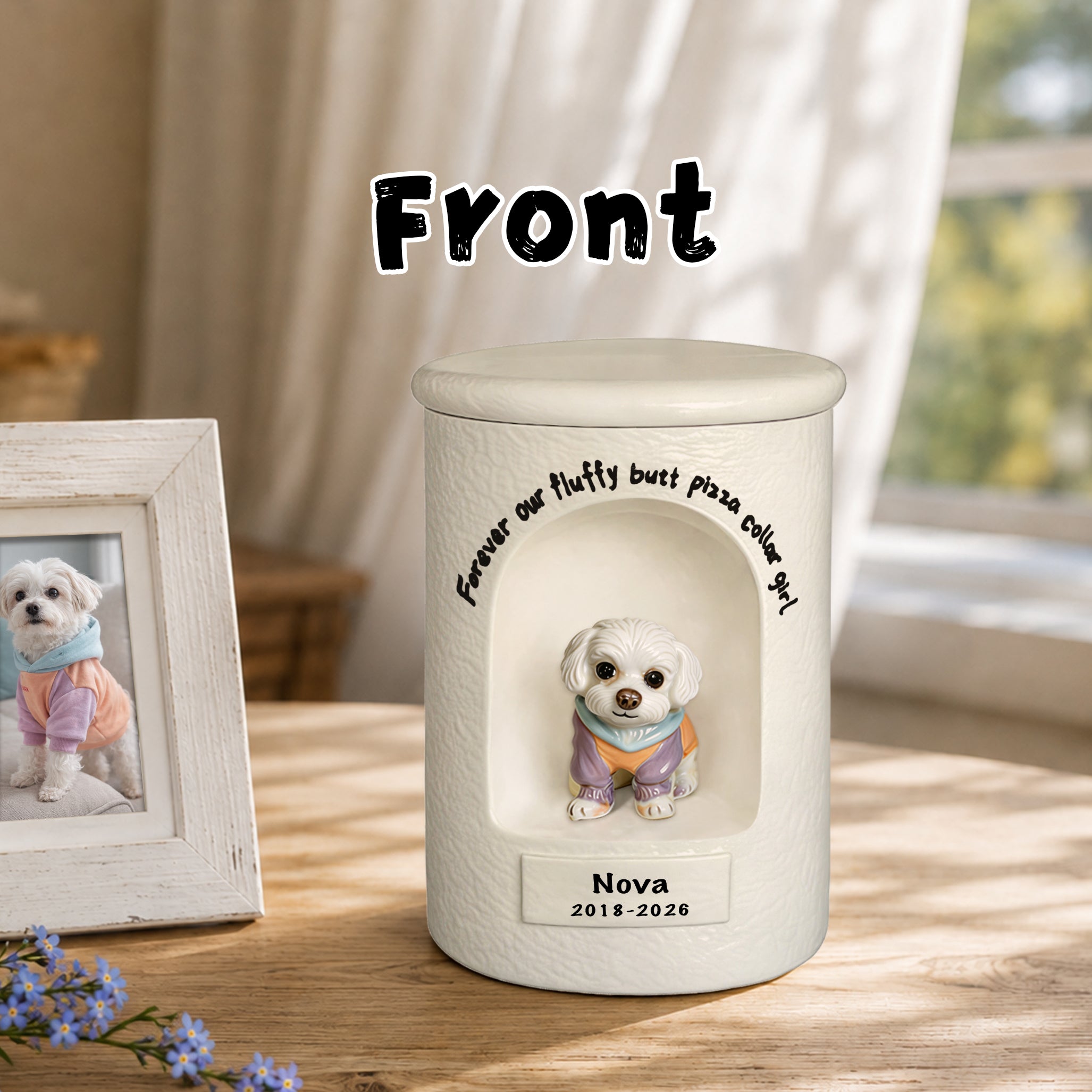
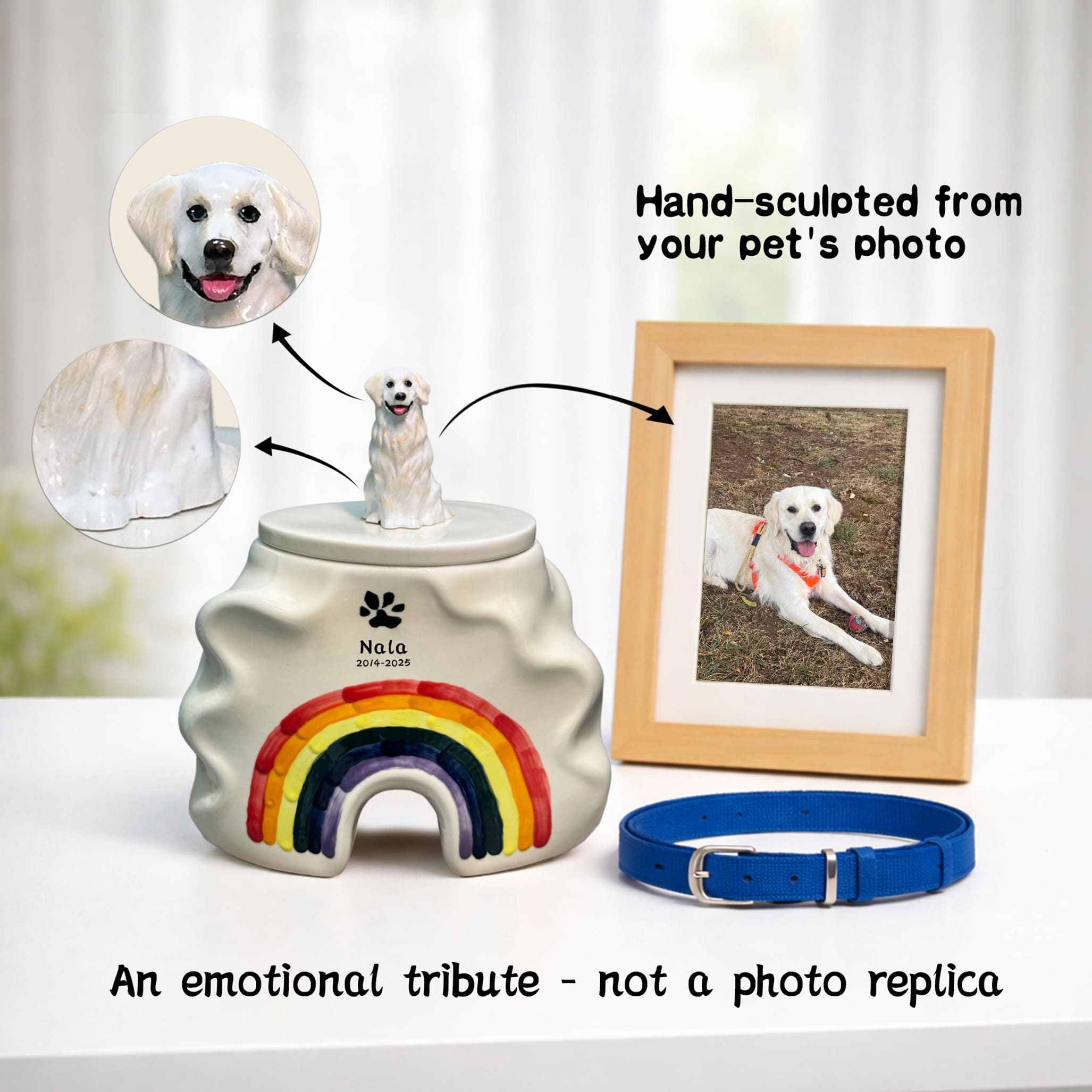
How Custom Ceramic Pet Urns Are Made
The story behind a handmade memorial
When someone chooses a custom ceramic pet urn, they are not simply buying a container for ashes.
They are choosing a lasting tribute to a companion who shared years of life, routine, and love.
Unlike mass-produced urns, handcrafted ceramic urns are created slowly. Each piece passes through multiple stages of sculpting, shaping, firing, and painting before it becomes the final memorial.
Understanding how these urns are made can help families appreciate the care and craftsmanship behind them.
How custom ceramic pet urns are made
Most handcrafted ceramic pet urns are created through a multi-step process that combines traditional pottery techniques with detailed hand finishing.
The typical process includes:
Design and reference preparation
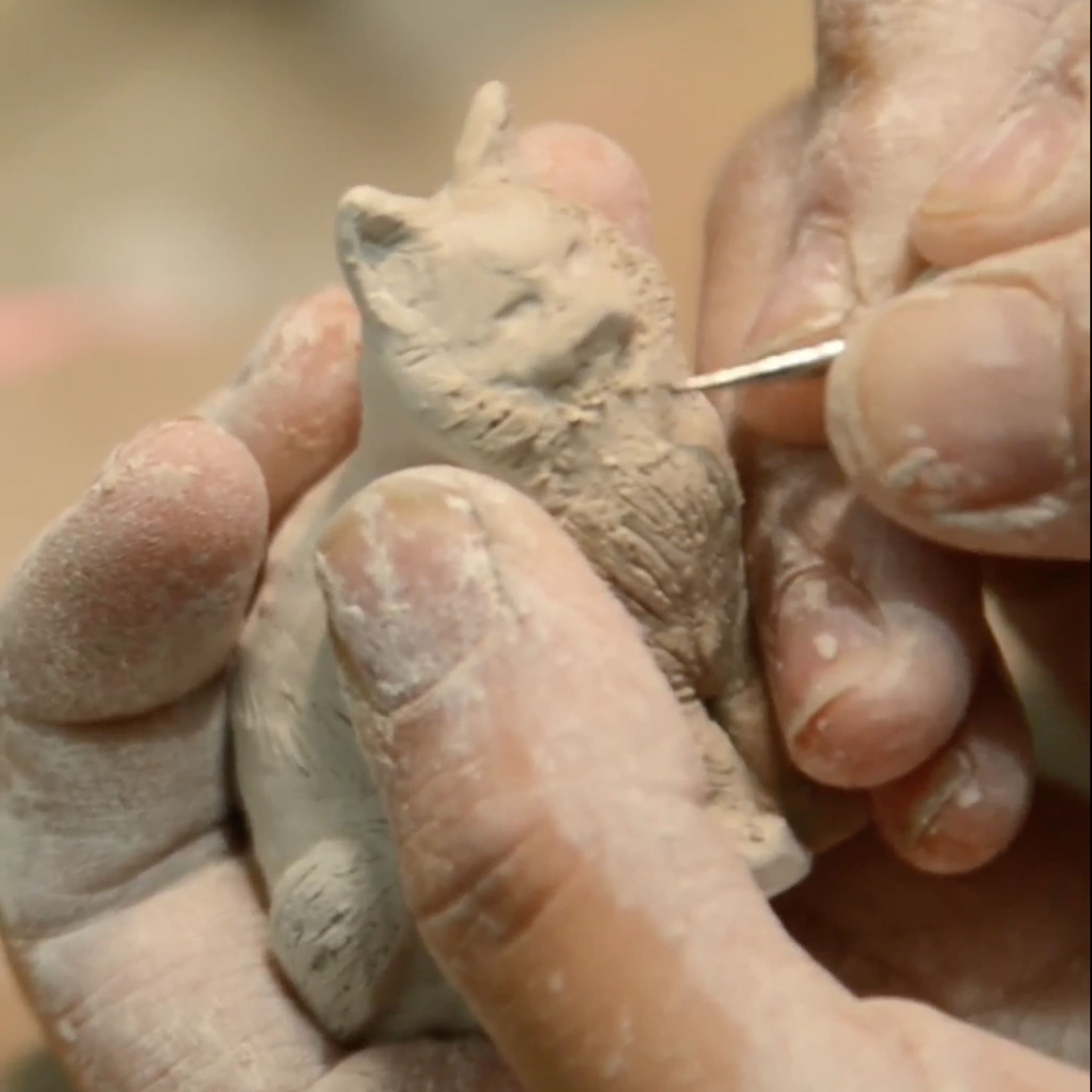
Clay shaping and forming
First kiln firing (bisque firing)
Hand painting and glazing
Second kiln firing
Final inspection and finishing
Because each step must be completed slowly and carefully, creating a single urn can take several days or even weeks.
Step 1: Preparing the pet’s reference details
Custom urns often begin with photos of the pet.
Artists study the details carefully:
fur patterns
ear shape
facial expression
body posture
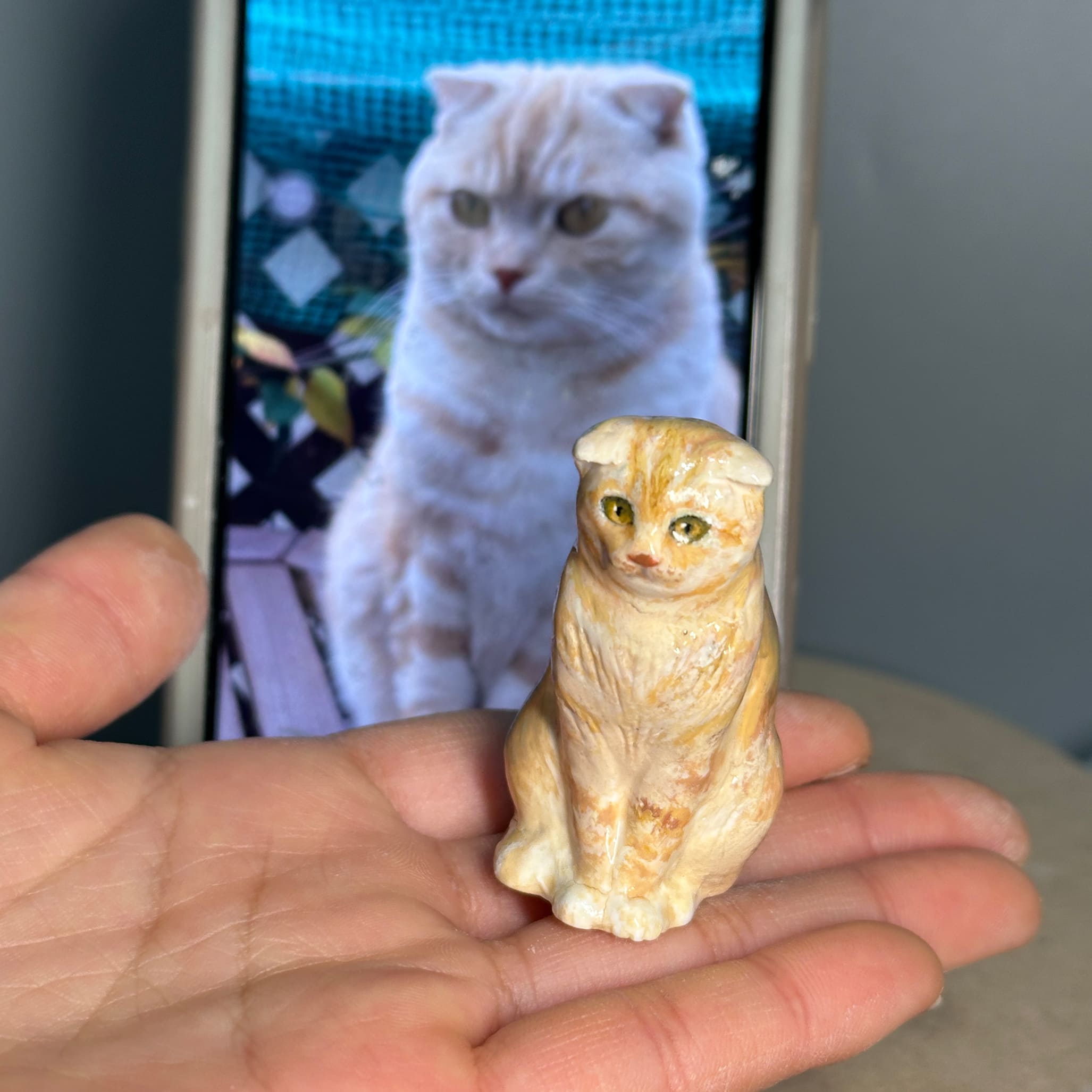
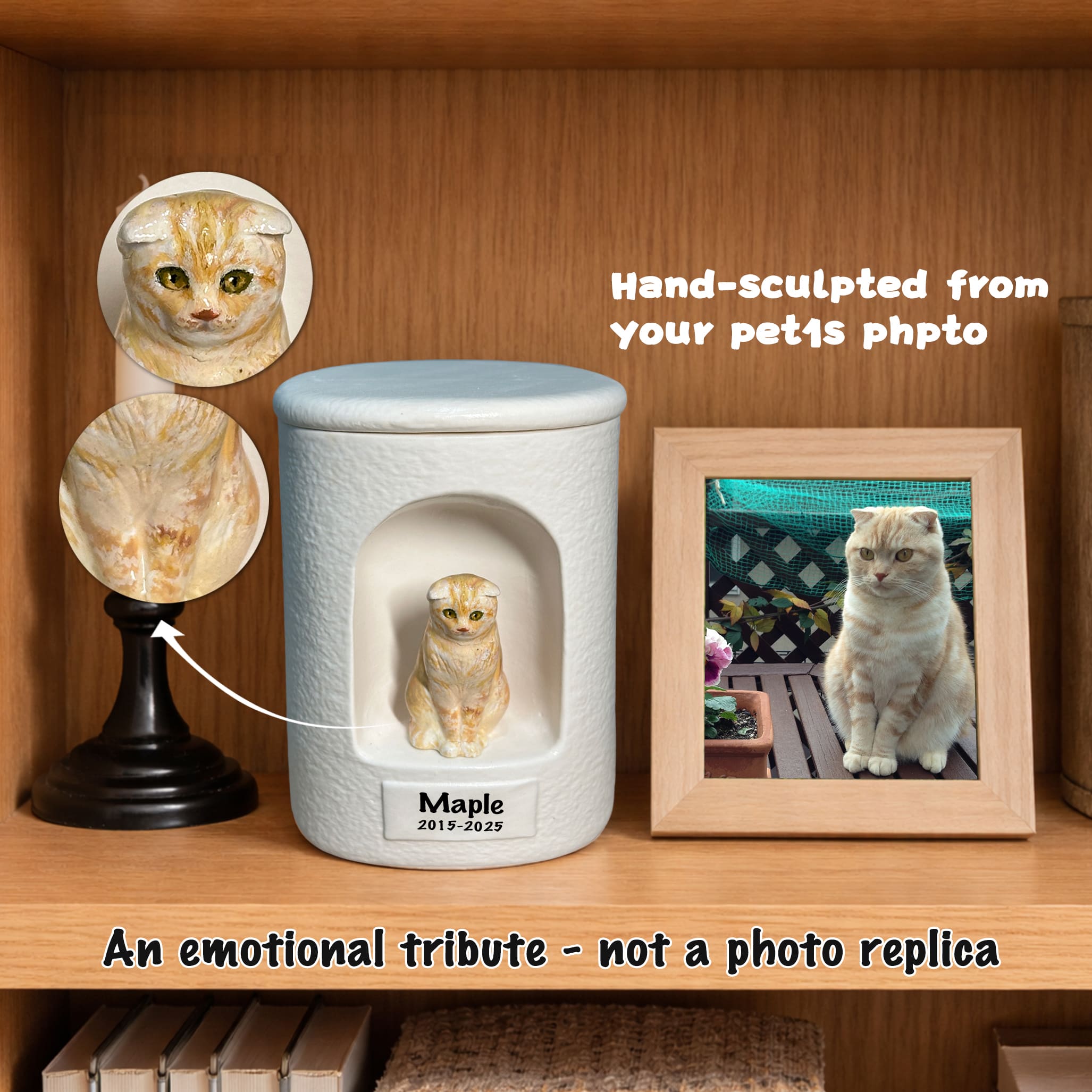
For figurine urns, sculptors use these photos to create a small representation of the pet. The goal is not perfect duplication but capturing the spirit and personality of the companion.
This stage sets the foundation for everything that follows.

Step 2: Shaping the ceramic urn
Once the design is finalized, the urn body is formed using ceramic clay.
Depending on the design, artisans may use:
hand-building techniques
pottery wheel shaping
molded ceramic forms
The clay must be shaped carefully to ensure the urn has enough internal space to safely hold the ashes.
During this stage, the urn structure is still fragile and must dry slowly before firing.
Step 3: The first kiln firing
After the clay has dried completely, the urn is placed inside a ceramic kiln.
This first firing is called bisque firing.
Temperatures typically reach around 1800°F (980°C).
The heat removes remaining moisture and transforms the clay into hardened ceramic.
After this stage, the urn becomes durable enough for painting and glazing.
Step 4: Hand painting and detailing
Once the bisque-fired urn has cooled, artists begin the most delicate stage: painting.
For custom urns, this may include:
painting the figurine details
adding fur textures and color tones
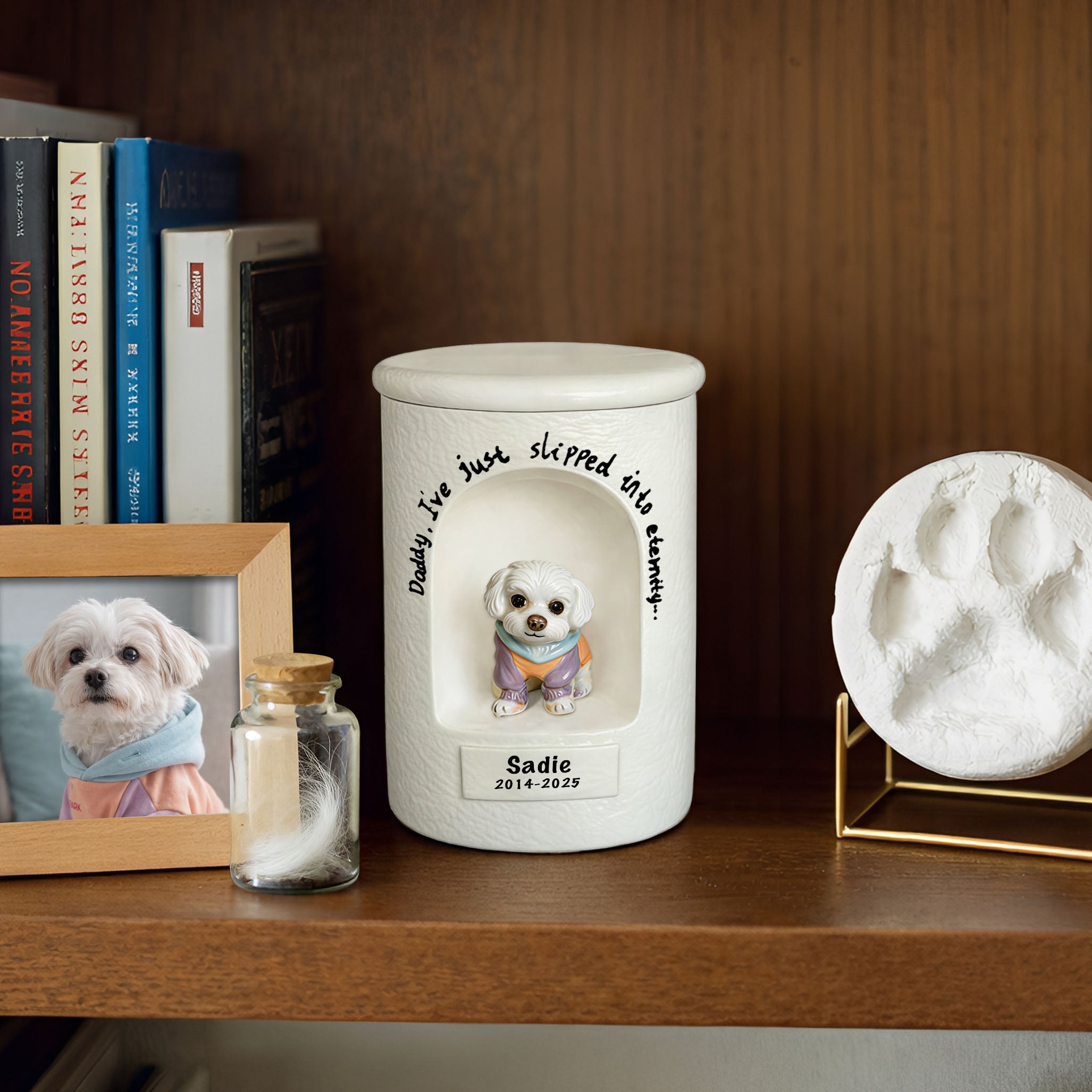
applying name engravings
painting memorial messages or dates
This step requires patience because multiple layers of ceramic pigment may be needed to achieve natural color depth.

Step 5: Glazing and final firing
After painting is complete, the urn is coated with a ceramic glaze.
Glaze serves two important purposes:
it protects the painted surface
it creates the final glossy or satin finish
The urn is then placed back into the kiln for the second firing.
During this stage, temperatures fuse the glaze permanently with the ceramic body.
Once cooled, the urn becomes waterproof, durable, and suitable for long-term display.
Step 6: Final inspection and assembly
Before the urn is packaged, each piece is inspected carefully.
Artisans check:
paint consistency
glaze quality
structural stability
engraving accuracy
Only after passing inspection is the urn prepared for shipping to the family.
For many artisans, this final stage carries emotional weight. Each urn represents a family’s memories and a beloved companion.
Choosing the right urn size
Before selecting a custom urn, it’s important to ensure the urn has enough internal capacity.
A common guideline used by crematoriums is:
1 pound of body weight ≈ 1 cubic inch of ashes
You can learn more here:
If you want to understand how ashes are measured, this guide may help:
Why handcrafted urns feel different
Machine-produced urns can be manufactured quickly.
Handcrafted ceramic urns are different.
They carry:
visible brush strokes
small variations in glaze
subtle details in sculpted figurines
These imperfections are not flaws—they are reminders that the piece was created by human hands.
For many families, that human touch makes the memorial feel more meaningful.
Frequently Asked Questions
How long does it take to make a custom ceramic pet urn?
Handcrafted ceramic urns usually take 2–5 weeks depending on drying time, kiln firing schedules, and hand painting.
Are ceramic pet urns durable?
Yes. High-temperature kiln firing makes ceramic urns strong and long-lasting. When displayed indoors, they can remain intact for decades.
Can ceramic urns hold all of a pet’s ashes?
Yes, as long as the urn size is selected based on the pet’s weight and ash volume.
Are custom urns made individually?
Yes. Custom ceramic urns are typically created individually rather than mass produced, especially when they include personalized figurines or engravings.
Final thoughts
A custom ceramic pet urn is more than a functional object.
It is the final chapter of a long relationship between a pet and the family who loved them.
From clay shaping to kiln firing, each stage of the process reflects care, patience, and respect.
In the end, the goal is simple:
to create a place where memories can rest safely and remain part of the home.
Best Selling Pet Urns for Dogs & Cats