Pet Memorial Guide
Meaningful Ways to Honor the Life of Your Beloved Pet
Losing a pet leaves a quiet space that feels impossible to fill. For many families, pets are not simply animals—they are companions who shared daily routines, small joys, and years of unconditional loyalty.

Creating a pet memorial is one way people choose to honor that bond.
A memorial does not erase grief, but it can create a place where memories feel welcome. Whether simple or elaborate, a pet memorial allows the love shared with a companion to remain present in everyday life.
What Is a Pet Memorial?
A pet memorial is any object, space, or ritual that honors the memory of a beloved companion.
Many families create memorials after cremation or burial, but a memorial can also be symbolic—such as a photo display, planted tree, or keepsake.
Common types of pet memorials include:
-
memorial urns
-
framed photos
-
paw print keepsakes
-
engraved stones
-
planted garden memorials
Each memorial serves the same purpose: preserving the memory of a life that mattered.
Why Pet Memorials Are Important for Grieving
Grief experts often describe pet loss as a form of disenfranchised grief, meaning it is sometimes underestimated by society even though the emotional bond is real and deep.
Memorials help by giving grief a place to rest.
They can provide:
-
emotional closure
-
a way to remember daily companionship
-
a quiet place for reflection
Many people find that creating a memorial allows them to shift from the moment of loss toward a longer process of remembrance.
Popular Pet Memorial Ideas
There is no single way to create a memorial. Some people prefer something simple and private, while others create a dedicated remembrance space in their home.
Here are several ideas that many pet owners find meaningful.
1. A Memorial Urn
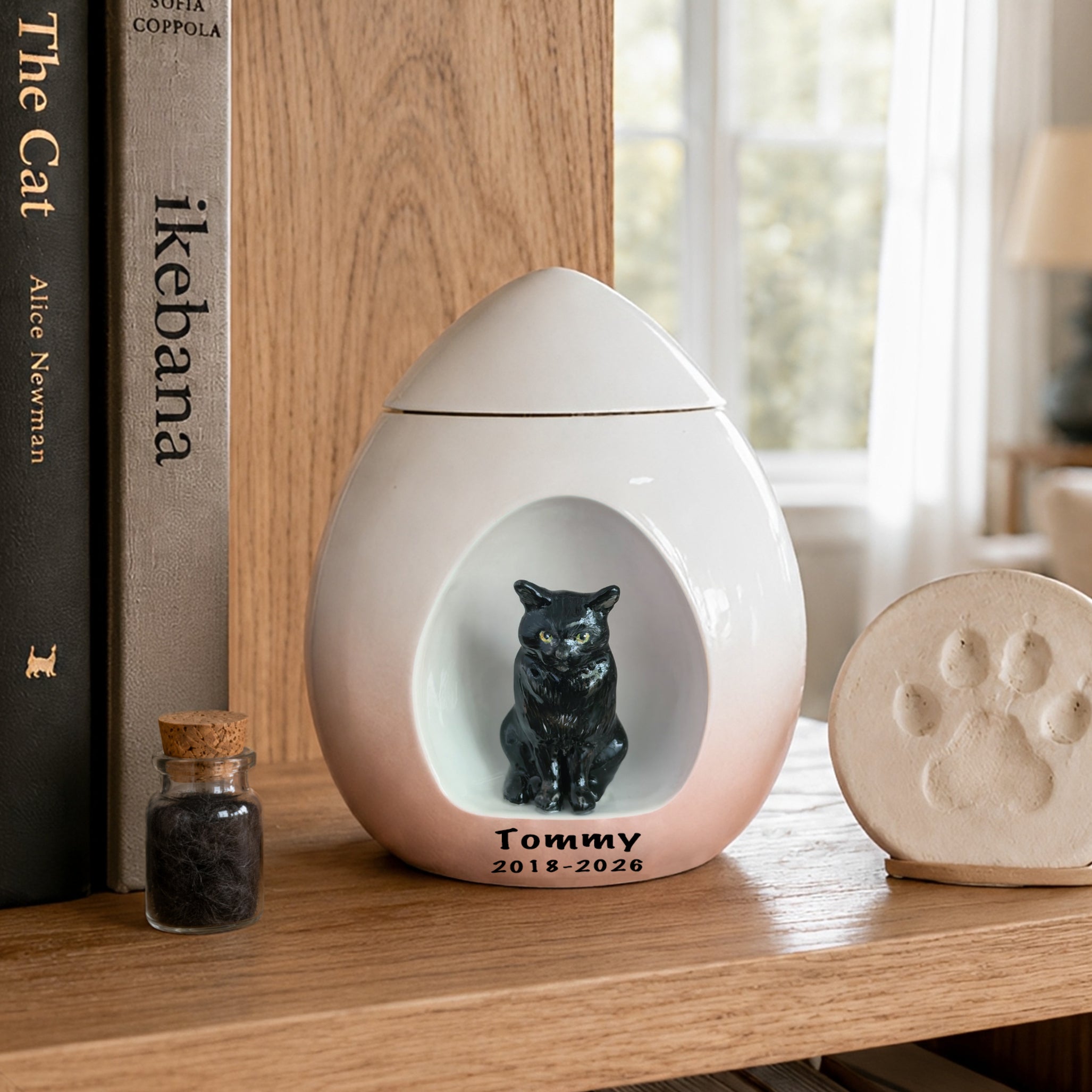
For families who choose cremation, a pet memorial urn is the most common form of remembrance.
Modern urns are often designed to blend naturally into home environments rather than resemble traditional funeral containers.
Examples include:
-
ceramic pet urns
-
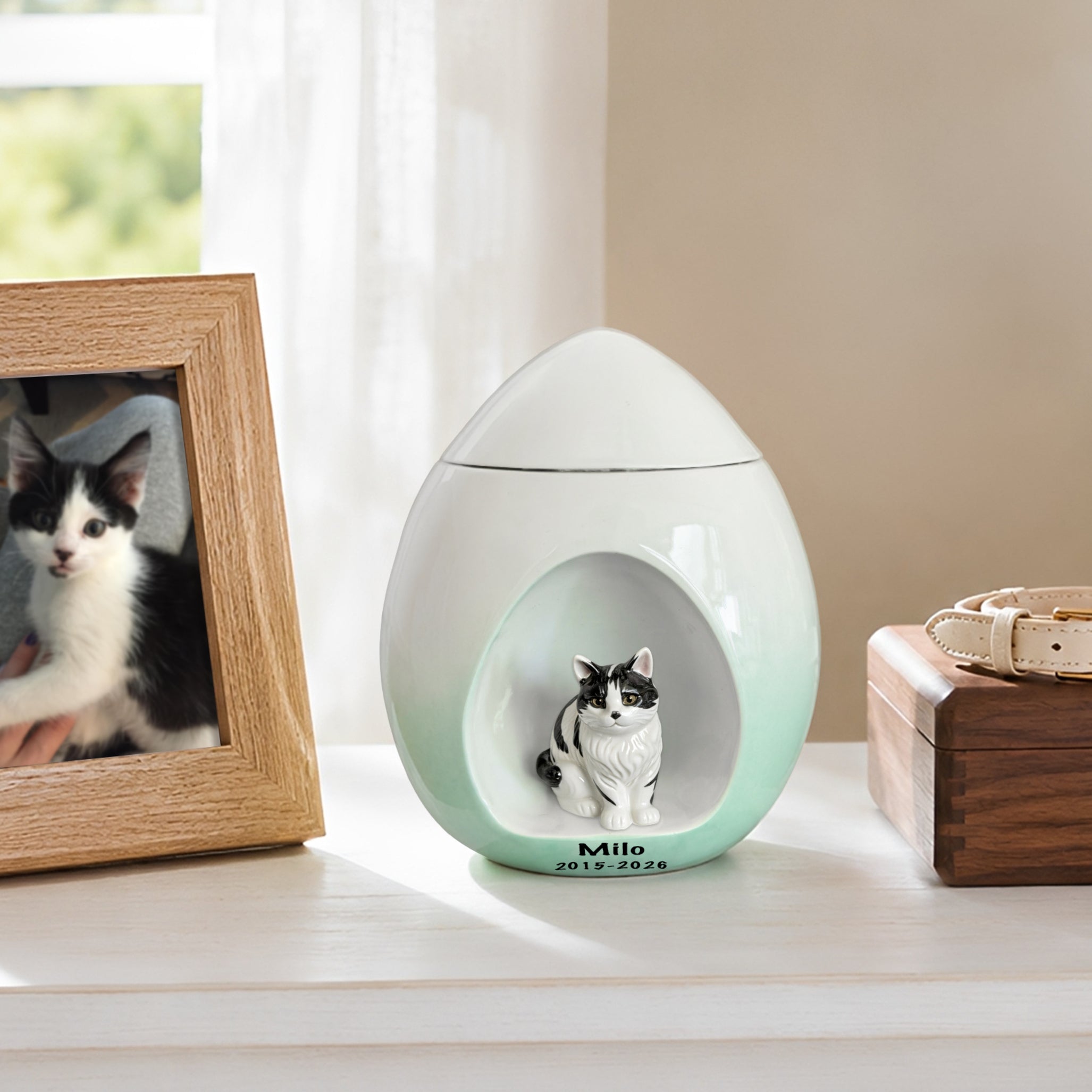
figurine urns that resemble the pet
-
paw print urns
-
minimalist decorative urns
These memorial urns allow ashes to be kept safely while honoring the life of the pet.
You can explore memorial urn options here:
2. A Photo Memorial Space
Many families create a small display using:
-
a framed photograph
-
a collar or tag
-
a candle
-
a small decorative object
This type of memorial can be placed on a bookshelf, bedside table, or mantel.
The goal is not to create a shrine but to create a quiet place where memories feel natural within the home.
3. Paw Print Keepsakes
Another popular memorial is a preserved paw print.
Veterinary clinics often offer clay impressions or ink prints. These keepsakes capture a physical imprint that many families find deeply meaningful.
Paw prints can be displayed in frames, shadow boxes, or decorative stands.
4. Memorial Garden
Some families prefer an outdoor tribute.
A pet memorial garden may include:
-
engraved stones
-
planted flowers or trees
-
small statues
-
wind chimes
Garden memorials can create a peaceful place for reflection and remembrance.
Understanding Pet Loss
Grieving the loss of a pet is natural and deeply personal. Pets often spend years with us, becoming part of everyday life.

Many pet owners experience emotions such as:
-
sadness
-
loneliness in the home
-
guilt or second-guessing decisions
-
the absence of familiar routines
These emotions are completely normal. Studies in psychology show that grief after pet loss can mirror the emotional patterns experienced when losing a close friend or family member.
If you would like to explore this topic further, you can read our detailed article:
Waiting for Your Pet’s Ashes to Come Home
For many pet owners who choose cremation, the period of waiting for ashes can be emotionally complex.
People often begin thinking about:
-
how they want to remember their pet
-
where a memorial will be placed
-
what type of urn or memorial object feels meaningful
This waiting period can be an important transition moment in the grieving process.
🔗 When You're Waiting for the Ashes to Come Home
When Is the Right Time to Create a Pet Memorial?
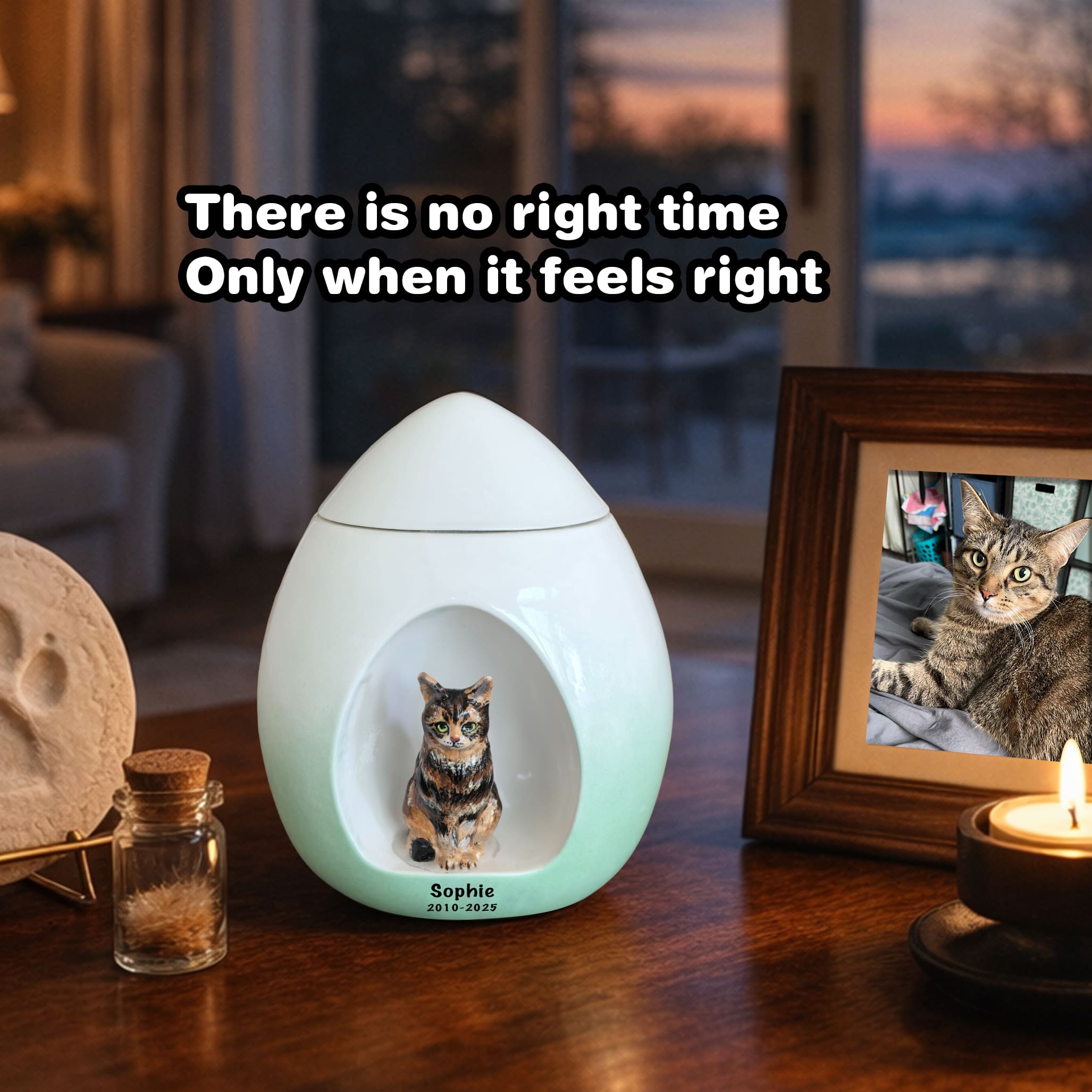
There is no universal timeline for creating a memorial. Some pet owners prepare a memorial space immediately after cremation, while others wait weeks or months.
What matters most is emotional readiness.
For some people, creating a memorial space helps them process grief. For others, time is needed before choosing a permanent tribute.
🔗 Is It Too Early to Create a Pet Memorial?
Where to Place a Pet Urn at Home
Choosing where to place a pet urn is a personal decision. Many owners select spaces that feel peaceful and natural within the home.
Common locations include:
-
a bookshelf in the living room
-
a bedside table
-
a quiet memorial shelf
-
a fireplace mantel
The goal is to create a space that feels respectful and comforting. pet urn placed on home memorial shelf
If you would like more ideas, read our guide:
🔗 Where to Place a Pet Urn at Home
Is It Normal to Keep Pet Ashes at Home?
Many pet owners wonder whether keeping ashes at home is the right choice.
In reality, it is very common. Keeping ashes nearby can provide a sense of continued presence and emotional connection.
Others choose alternative memorial options such as scattering ashes in meaningful locations or keeping a small portion in a keepsake urn.
🔗 Is It Normal to Keep Pet Ashes at Home?
Types of Pet Memorial Urns
Pet memorial urns come in many forms depending on personal preference.

Paw Print Urns
Paw-shaped urns symbolize the mark pets leave in our lives.
These urns emphasize the symbolic paw design while safely holding ashes.
Cylinder Memorial Urns
Minimalist cylinder urns offer a modern and understated appearance.
These designs are popular for people who prefer subtle memorials that integrate naturally into home decor.
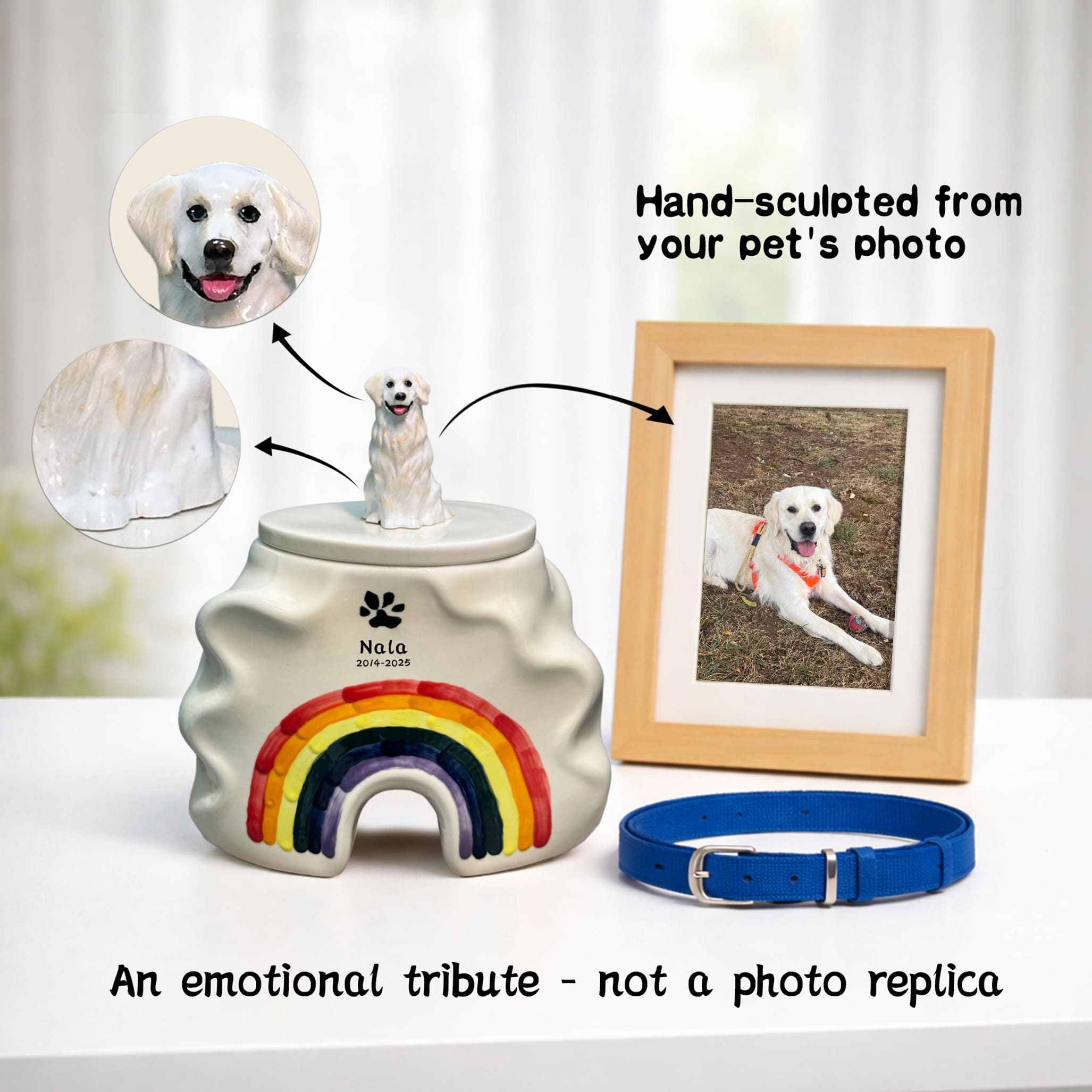
Custom Portrait Pet Urns
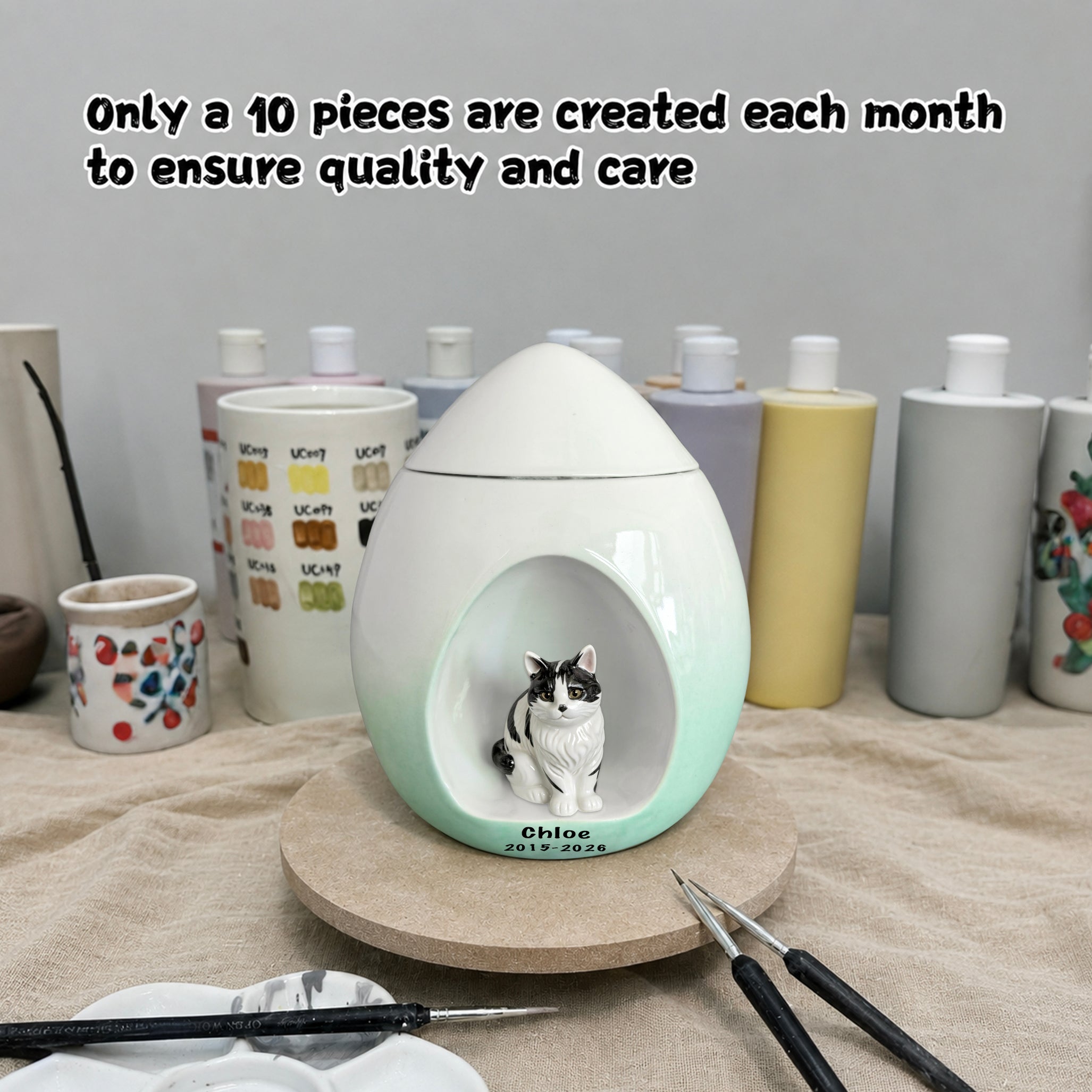
Some urns include sculpted or painted portraits created from pet photos.
🔗 Explore Custom Pet Urns from Photo
These pieces transform a pet's image into a lasting memorial sculpture.
Creating a Pet Memorial Corner
Many pet owners create a small memorial space dedicated to their pet’s memory.

Above: A real photo of a small memorial space in my home.
This space may include:
-
the urn
-
a framed photo
-
a collar or tag
-
a paw print keepsake
-
a candle or small plant
Over time, these spaces often become less about loss and more about appreciation for the years shared with a beloved companion.
Honoring the Bond You Shared
Pets leave lasting marks on our lives through companionship, loyalty, and everyday presence.
A memorial is simply a way to acknowledge that bond.
It does not need to be elaborate. What matters most is that it reflects the relationship you shared.
Over time, many pet memorials become quiet reminders of gratitude rather than sadness.
Frequently Asked Questions
Is it common to keep pet ashes at home?
Yes. Many families choose to keep their pet’s ashes in a memorial urn as a way to maintain a sense of connection and remembrance.
How long does pet cremation take?
Most crematoriums return ashes within 3–14 days, depending on scheduling and service type.
What do pet ashes look like?
Pet ashes are not powder. They are fine bone fragments processed after cremation and placed inside a sealed bag.
Can a pet memorial include more than ashes?
Yes. Some families place collars, tags, photos, or small keepsakes alongside the urn.
Final Thoughts
A pet memorial is not about letting go.
It is about acknowledging the years of companionship that shaped everyday life.
Whether it is a ceramic urn, a garden stone, or a small photo display, the purpose is the same: to keep the memory of a beloved companion present in a meaningful way.
Grief changes over time, but the love shared with a pet remains part of the home forever.
Best Selling Pet Urns for Dogs & Cats