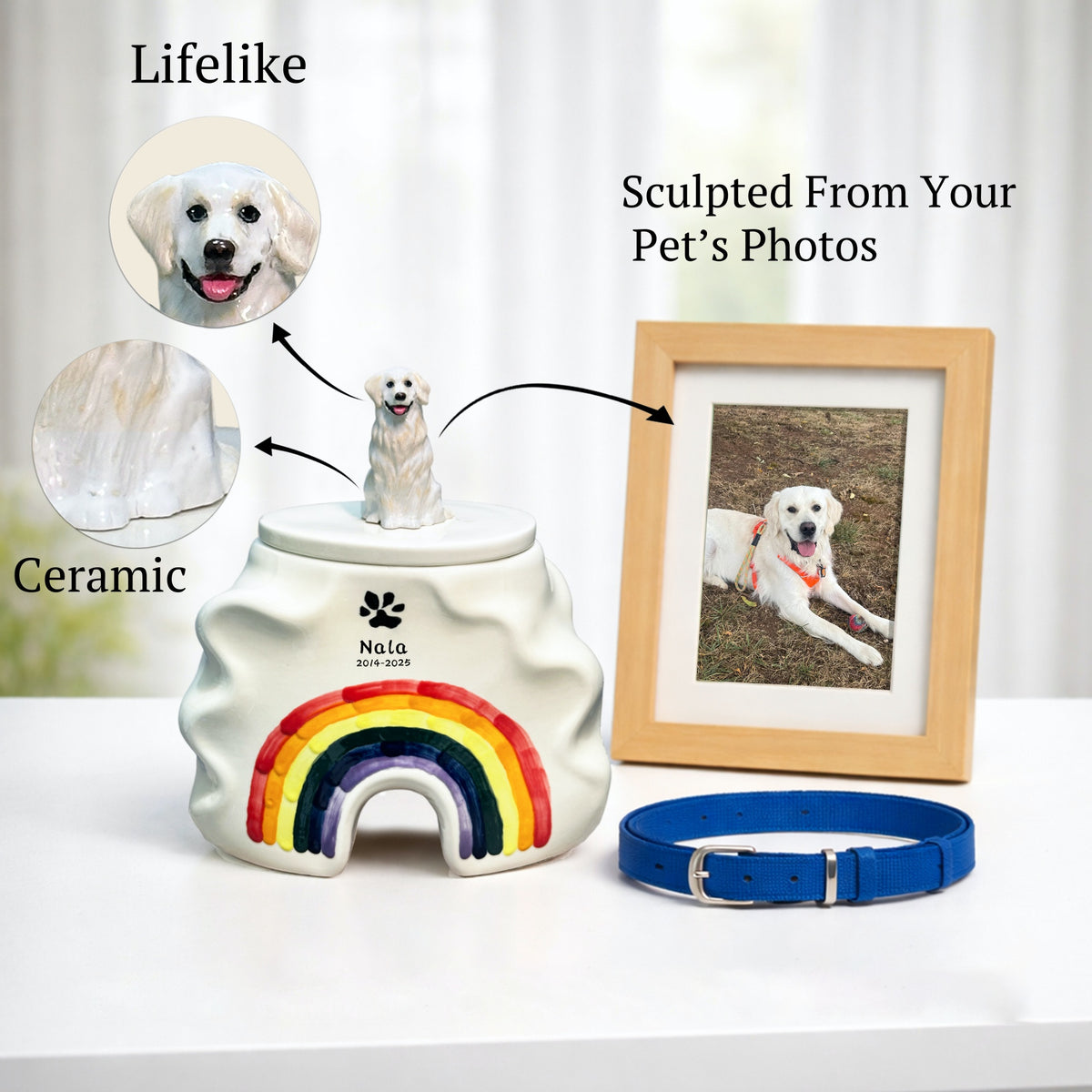
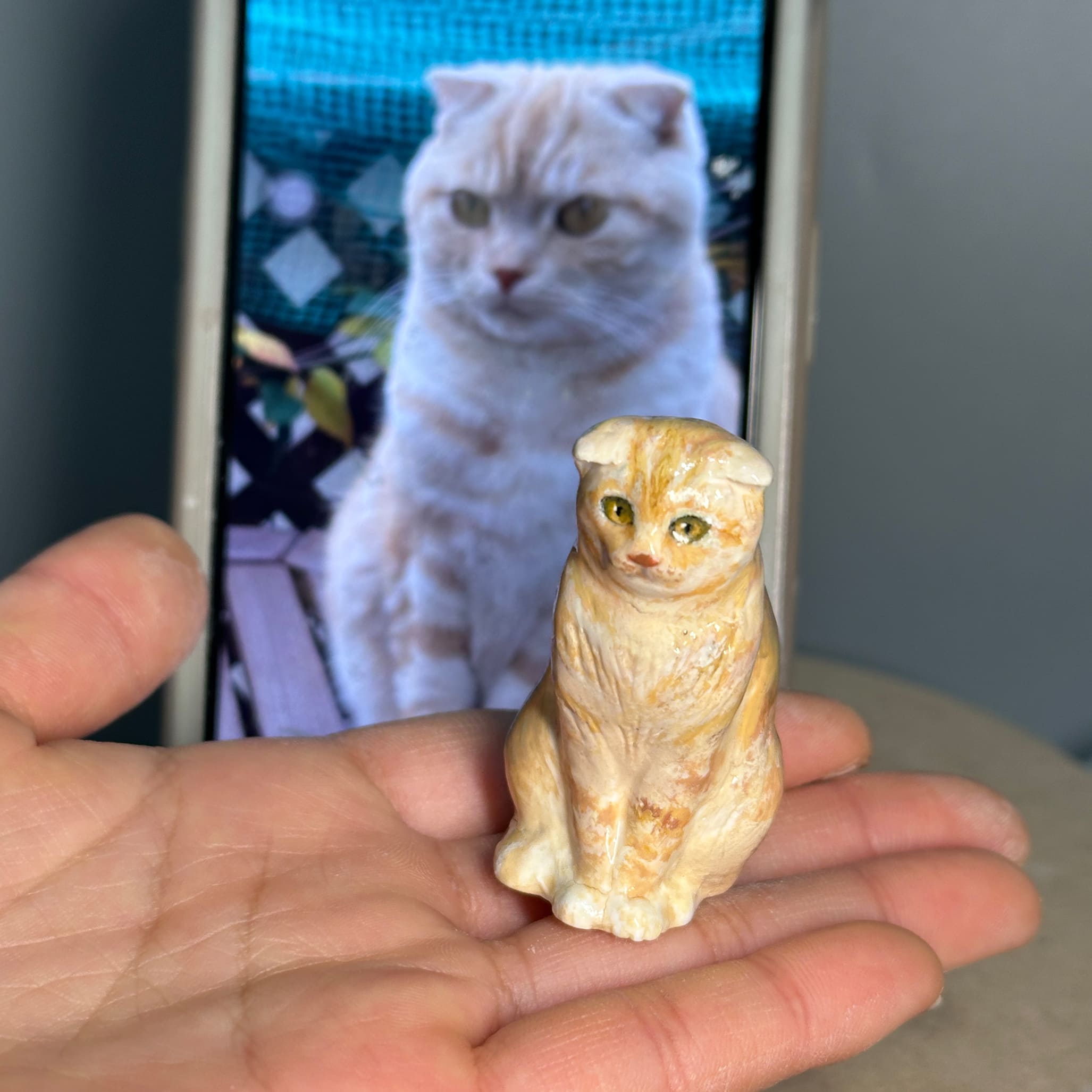
Article: What If You Don’t Have Clear Photos of Your Pet? Can a Custom Memorial Still Be Made?
What If You Don’t Have Clear Photos of Your Pet? Can a Custom Memorial Still Be Made?
Not everyone has the perfect picture of their pet.
Sometimes, your best photo was taken years ago on an old flip phone.
Sometimes, your dog just wouldn't stop moving.
And sometimes, the very second you brought out your camera, your cat would turn away.
Often, it’s only after they are gone that you realize your favorite photo isn’t necessarily the clearest one.
If you are considering a custom pet memorial, it’s completely natural to ask yourself one worried question:
Is my photo good enough?
In most cases, imperfect photos are still incredibly valuable. The goal isn’t to have a flawless, professional portrait—it’s simply to have enough visual clues to understand the unique traits that made your pet who they were.
Quick Answer
Yes, you can absolutely create a custom pet memorial even if your photos are old, slightly blurry, cropped, or taken from unusual angles.
The most helpful photos are those that collectively show a mix of key features:
-
Face shape
-
Ear shape and position
-
Coat color
-
Unique markings
-
Body proportions
-
Familiar postures
A handful of everyday snapshots can often tell a story that a single, perfect studio portrait never could.
Everyday Photos Often Hold the Deepest Meaning
Flawless photos are helpful, but they are rarely the reality. Most pet parents don’t take pictures of their fur babies with the intention of making a memorial piece later on.
They capture real, everyday life.
A dog curled up on the couch.
A cat watching birds by the window.
A blurry action shot from a walk in the park.
Christmas morning chaos.
A quick snapshot taken from across the room because they happened to look cute in that exact moment.
These pictures might not look professional, but they are rich with information. One photo might clearly show the shape of their ears.
Another might capture the pattern of their fur. A third might hold that exact, quirky expression everyone remembers. When brought together, they create a beautifully complete picture for an artist.
If you are unsure how many images to prepare, our guide on how many photos you need for a custom pet urn explains what types of views are most useful.

What Makes a Photo Helpful?
A photo doesn’t have to be beautiful to be useful. For custom artwork, clear information is much more valuable than perfect composition.
-
Face Shape: Front-facing or three-quarter views help show the width of their face, muzzle length, eye placement, and overall proportions.
-
Ears: Ears are one of a pet’s most defining features. Try to find a photo that captures their ears in their natural, relaxed position.
-
Coat Color and Markings: If your pet had a white chest, a dark patch around one eye, mismatched paws, a stripe down their nose, or a unique tail, look for photos where those details are visible.
-
Familiar Postures: The poses we remember best are rarely formal sits. Maybe your dog always leaned slightly to one side. Maybe your cat always tucked their paws completely under their chest. Incorporating these little habits can make a memorial space feel incredibly personal and intimate.
What if the Photos Are Blurry?
Even if a photo is slightly out of focus, it can still be helpful as long as the general shapes and colors are recognizable.
Challenges usually only arise when essential details become completely indistinguishable. For instance:
-
A blurry photo CAN still reveal: Body shape, ear position, coat color, and large markings.
-
A blurry photo CANNOT easily reveal: Eye details, tiny facial spots, or fine fur patterns.
This is exactly why combining multiple photos is so much more effective than relying on just one.
What if I Only Have One Good Photo?
One photo is always better than none, though it does offer a few more limitations. If you find yourself with only one clear image, try digging through these often-overlooked places for extra clues:
-
Old cell phones
-
Phones belonging to family members or friends
-
Past social media posts
-
Cloud photo libraries
-
Old text message conversations
-
Saved videos
-
Photos sent by relatives or pet sitters
Even a quick screenshot from an old video clip can reveal a helpful new angle. Remember, you aren't searching for another masterpiece—you are just looking for one more piece of the visual puzzle.

Should I Edit or Enhance Old Photos First?
A few simple, basic adjustments can sometimes make a photo much easier to work with:
-
Raising the brightness
-
Cropping the image closely around your pet
-
Boosting the contrast slightly
-
Locating and using the original high-resolution file whenever possible
However, it is best to avoid heavy alterations. AI enhancement tools and powerful filters can sometimes invent details or textures that weren't originally there.
For a custom memorial, an imperfect but authentic photo is always more valuable than a heavily edited image that changes your pet's true look.
What if Different Photos Show Different Colors?
This is incredibly common. Indoor lighting can make brown fur look almost black. The warm glow of evening sun can make white fur look yellow. Cell phone cameras shift colors, too.
If you notice these differences, simply let the artist know which image captures their true color best. You can also describe it in your own simple words:
-
"A warm, chocolate brown."
Your pet's memory deserves more than a shoebox.
Handcrafted urns, made to honor the bond that never fades.
View Our Urns → -
"A soft cream color."
-
"Grey with a distinct white patch on the chest."
-
"Jet black with a tiny tan spot."
Photos provide the map, but your memories provide the true context.
Sharing the Details That Matter Most
When photos are limited, your written descriptions become incredibly powerful. Feel free to share little notes like:
-
"Her left ear always flopped over just a little bit."
-
"His nose was more of a pinkish-brown than a true black."
-
"She had exactly one white sock on her back paw."
-
"His chest fur was much lighter than the fur on his back."
-
"This photo captures his exact 'guilty' expression perfectly."
These notes help ensure the focus is on the details that are emotionally significant to you, not just visually apparent.
A custom memorial isn't about replicating every single pixel of a photograph; it's about capturing the essence of what made your pet look like them.
If you are concerned about likeness, our guide on how accurate custom pet urns can be explains what can realistically be recreated from photographs.
Photos to Avoid as Your Primary Reference?
While almost any image can offer a clue, try not to rely solely on:
-
Heavy beauty or face-altering filters
-
Ultra-wide-angle shots (which distort proportions)
-
Photos taken from a great distance
-
Images where most of their face is hidden by shadows or toys
-
Dramatic, heavily colored lighting
-
Screen captures that have been compressed and blurred over time
If these photos show a helpful detail, you can absolutely still send them! Just try to pair them with a few clearer everyday shots.
| Photo Type | What It Captures Well | Best Used For |
|---|---|---|
| Studio Portrait | Fine details, exact markings, sharp eye color | Primary reference for facial features |
| Candid Snapshot | Natural posture, favorite spots, authentic expressions | Capturing personality and spirit |
| Video Screenshot | Movement, unique quirks, secondary angles
|
Filling in missing visual gaps |

What Happens After You Send Your Photos?
An artist won't just look at your photos as isolated pictures; they review them together as a complete collection. Different images help answer different questions:
-
This photo reveals their face shape.
-
This one maps out their markings.
-
This one shows their profile.
-
This one captures their soul.
All of this gathered information is then carefully woven into the sculpting and detailing process. You will also receive a preview before everything is finalized, giving you the opportunity to review the piece.
You can read what happens after you order a custom pet urn if you would like to understand the process from photo submission through approval.
Embracing What Your Photos Can Tell Us
It is always best to hold gentle, realistic expectations for what your photos can support. If there are no images showing a specific marking, facial angle, or physical trait, it may be difficult to recreate that detail with absolute precision.
A thoughtful custom process should never guess or invent details and claim them as fact. Instead, the goal is to use your real, existing memories to create something deeply recognizable and comforting.
This is exactly why personal touches beyond the physical appearance matter so much. Even when photos are limited, a name, a date, a physical paw print, or a familiar pose can give a memorial profound emotional weight.
Our guide on what makes a pet urn feel personal explores this in more detail.
Old Photos Still Carry What Matters Most
Photo quality is important, but so is your memory.
You might not have a perfect, front-facing portrait. You might only have a slightly blurry photo taken eight years ago.
But if that photo shows the ears you used to stroke, the markings you knew by heart, or the expression you could recognize anywhere—it is priceless.
A beautiful tribute doesn’t begin with a perfect file size. It begins with the little details you never want to lose.
Frequently Asked Questions
Can I use old photos to create a custom pet urn?
Yes, absolutely. Old photos are wonderful for showing face shapes, coat colors, markings, ear placement, and posture. Sending multiple photos is especially helpful when individual pictures are limited.
Will a blurry pet photo still work?
Slightly blurry photos are still very useful for understanding larger traits like body shape, ear positioning, and primary coat colors. For fine facial details, pairing them with at least one clearer photo is highly recommended.
What if I truly only have one photo of my pet?
One photo can absolutely still work, depending on what it shows. We highly recommend checking old cell phones, family group chats, social media archives, cloud back-ups, and video clips to see if any secondary images can be found.
Can I use a screenshot from a video?
Yes. Video screenshots are a fantastic way to capture an angle or a specific expression that might be missing from your photo album. Try to use the highest-quality frame pause you can find.
Should I use an AI tool to sharpen my old pet photos?
Adjusting basic lighting, brightness, or contrast is helpful, but we recommend avoiding heavy AI enhancement as it can create artificial details.
It is always best to share the original, unaltered photo alongside any edited versions.
How many photos should I send?
Several clear photos from different angles are usually more useful than many nearly identical images.
You can read our guide on how many photos are needed for a custom pet urn for more specific guidance.
Will the final memorial look exactly like my pet?
Custom memorials are sculpted based entirely on the visual information provided in your photos, so the final result is closely tied to the variety and clarity of your references.
The ultimate goal is to create a deeply recognizable, comforting portrait that captures their true spirit, rather than a rigid, pixel-for-pixel replica.
A Final Thought
Please don’t set aside a photo you love just because it’s old or imperfect. Look closely at what it is telling you right now. Look at those ears. Those markings. That familiar posture. That beautiful expression.
Then, let’s find a few other snapshots to help fill in the rest. When gathered together, ordinary everyday photos hold far more magic and information than you might think.
Often, the image that makes the most beautiful memorial isn’t the one that is technically perfect.
It’s the one that makes you smile through your tears and say:
"Yes, that’s exactly them." If you are considering a photo-based memorial, you can explore our personalized pet urns to see how photographs, names, and individual details can become part of a piece made specifically for one pet.